How to Choose Loose Tube Fibre Cable in 2026?

Choosing a loose tube fibre cable in 2026 starts with the route, not the product name. Will it run through a duct, along an outdoor pole line, or into a building? Each setting exposes the cable to different stresses, from standing water and sunlight to pulling tension and tight bends. Small details matter. A route map, installation method, and expected fibre count can narrow the options quickly.

The cable’s construction should match those conditions. Loose tubes give optical fibres room to move as temperatures change, while gel or dry water-blocking materials help limit moisture spread. Compare fibre type, tube count, sheath material, crush resistance, and minimum bend radius against the project specification. Check the manufacturer’s technical data and relevant test documentation, including applicable IEC 60794 requirements. Do not assume that “outdoor-rated” means suitable for every aerial or duct installation. It may not.

Also consider how the cable will be installed and maintained. A higher fibre count can support future connections, but it may increase cable size and pulling demands. Confirm compatibility with closures, splice trays, and existing equipment before ordering. Ask suppliers for clear tensile, temperature, and water-blocking data rather than relying on broad marketing claims. Then compare those figures with the actual route and installation plan. A datasheet cannot reveal every site condition. That is an easy point to overlook. This guide explains the key choices, trade-offs, and checks that help buyers select a reliable loose tube fibre cable without paying for features their network does not need.
How to Choose Loose Tube Fibre Cable in 2026?

What Loose Tube Fibre Cable Is and How Its Structure Works

How to Choose Loose Tube Fibre Cable in 2026?
What Loose Tube Fibre Cable Is and How Its Structure Works

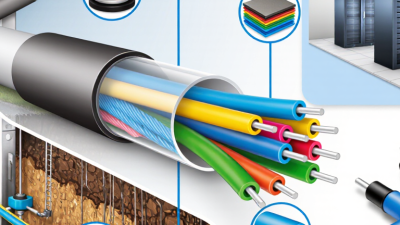
Loose tube fibre cable places optical fibres inside protective tubes, rather than holding each fibre tightly against the outer jacket. The fibres have room to move slightly as temperatures change or the cable bends. This design helps limit stress on the glass. Inside each tube, fibres may sit in water-blocking gel or dry protective material. Around the tubes, a central strength member and reinforcing elements help the cable resist pulling and crushing. The outer jacket shields it from abrasion and moisture. Details vary by cable design.

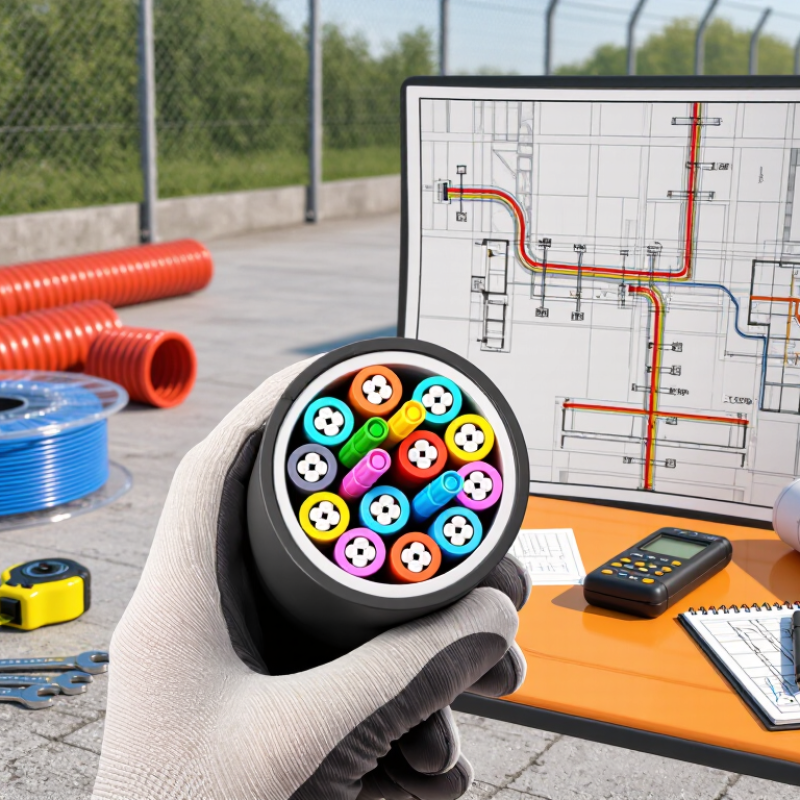
Think of a cable cross-section: coloured fibres sit in small tubes, grouped around a central rod. If moisture enters through a damaged jacket, water-blocking materials can slow its travel along the cable. They are not a substitute for sound installation. For 2026 projects, check the route before choosing a construction: duct, aerial, and direct-buried runs face different stresses. Confirm fibre count, operating temperature, bend radius, pulling tension, and jacket suitability against the project specification. A cable that looks robust may still be wrong for a tight duct.

Tips: Ask for the cable’s datasheet and verify the installation limits before work begins. Keep the stated bend radius, especially near closures and cabinet entries. Small detail, real impact. One easy mistake is selecting by fibre count alone; I have seen route conditions get less attention than they deserve. Check them early.

How to Match Cable Design to the Installation Environment

Choosing a loose tube fibre cable in 2026 starts with the route, not the catalogue. Trace the full path: a shaded duct can become a sunlit pole span, then enter a damp handhole. Each transition changes the cable’s exposure to moisture, temperature, pulling tension, and impact. Small details matter.

For buried routes, choose a design suited to direct burial, with water blocking and mechanical protection appropriate to the soil and installation method. In ducts, check outer diameter, pulling tension, bend radius, and expected duct fill; a cable that barely fits can be difficult to replace. Aerial spans need suitable strength members and a matching span rating. Indoor sections may require a jacket that meets the building’s fire-performance requirements. Verify these details against the product data sheet and project specifications.

Do not assume one construction suits the whole route. Sometimes, a transition enclosure and two cable types are easier to maintain, though they add a splice point that needs careful planning. Check minimum installation and maximum operating temperatures, not just the weather forecast. Confirm the bend radius at closures and corners. Then inspect the cable after pulling; sheath damage can be easy to miss. A site walk often catches what drawings miss.

How to Compare Fibre Count, Materials, and Performance

Choosing loose tube fibre cable in 2026 starts with the route and the required fibre count. Count current connections, then allow sensible room for planned growth. Too few fibres can force an early replacement; too many add cost and handling bulk. Check tube capacity against splice-tray space, not just the cable datasheet. Small details matter.

Material choices should match the installation. A polyethylene jacket is common outdoors, while indoor sections may need a jacket suited to the building’s fire-safety specification. Water blocking can use gel or dry elements. Gel helps resist water migration, but it can slow preparation during splicing. Dry designs are often easier to handle. Neither option is automatically better for every route.

Compare performance figures under the conditions the cable will actually face. Review attenuation, temperature range, crush resistance, tensile load, and minimum bend radius. For a long duct run, pulling load and bend limits deserve close attention. For aerial use, check span and weather requirements. A useful field check is to compare the cable’s limits with the route drawings and closure dimensions. Paper specifications can look ideal, yet installation space is easy to underestimate. Recheck the details before ordering.

How to Choose Loose Tube Fibre Cable in 2026?

Compare fibre count, materials, and performance for your route and installation conditions.

How to read the chart: 12, 24, 48, 72, 96, 144, and 288 fibres are common nominal count options; availability varies by cable design. Choose enough fibres for current needs plus planned growth, while checking the cable’s outside diameter and duct or pathway capacity. Outdoor loose-tube designs commonly use PBT buffer tubes, a water-blocking system such as gel or dry materials, and a polyethylene jacket. Confirm the specified attenuation, temperature range, water resistance, and minimum bend radius against the project requirements—the exact performance depends on the cable construction and fibre specification.

Counts shown are representative configurations, not a universal standard or a ranking of cable performance.

Which Standards and 2026 Requirements to Check

For a loose tube fibre cable, verify the standards behind each performance claim, not just the wording on its datasheet. IEC 60794 covers optical fibre cable test methods and requirements; IEC 60793 addresses optical fibres. Check the applicable parts and editions in your project specification. They may differ by cable type and market. No single standard covers every installation.

Match the fibre type to the link design. ITU-T G.652 and G.657 recommendations describe different fibre characteristics, including bend performance. Then review cable test evidence for tensile load, crush resistance, impact, temperature cycling, and water penetration. Look for stated test methods, limits, and results. A vague “compliant” label is not enough.

Check local 2026 project and market requirements before ordering. For European construction projects, EN 50575 may apply to reaction-to-fire performance; confirm whether the cable’s installation falls within its scope. Indoor fire rules, environmental declarations, and documentation requirements can vary elsewhere. Ask for current certificates and traceable reports, and confirm the tested construction matches the supplied cable. I would not assume a familiar specification guarantees suitability. I have seen that assumption create expensive rework. Also compare the cable’s outer diameter and minimum bend radius with actual ducts, closures, and pulling routes. A paper specification can miss a tight corner.

How to Choose Loose Tube Fibre Cable in 2026? – Which Standards and 2026 Requirements to Check

There is no single global “2026 loose tube cable” requirement. Applicable rules depend on the installation environment, destination market, project specification and contractually selected editions. Confirm current editions and local code requirements before ordering.

Selection Check What to Specify or Verify Relevant Standard or Reference Practical Acceptance Check
Installation route Identify whether the cable will be installed in duct, directly buried, aerially supported, or used in an indoor section. Confirm whether the route includes water exposure, rodents, UV, crushing or frequent handling. IEC 60794-3 series; the applicable sectional specification depends on cable type and installation method. Match the cable construction and test evidence to the actual route. Do not assume that a duct cable is suitable for direct burial or aerial installation.
General cable requirements Check the declared cable design, materials, construction details and performance requirements in the product specification. IEC 60794-1-1, General specification for optical fibre cables; use the edition stated in the project documents. Request a complete datasheet and a clear statement of the standard editions and cable type used for qualification.
Mechanical and environmental tests Review applicable tests for tensile performance, crush resistance, impact, bending, temperature cycling and other installation or service conditions. IEC 60794-1-21 covers mechanical test methods; IEC 60794-1-22 covers environmental test methods. Compare test conditions and acceptance limits with the project specification. A test method alone does not set every project’s required limit.
Duct or direct-buried construction Specify the cable for the intended outdoor route and define requirements for water penetration, moisture protection, crush resistance and any armour or rodent protection needed. IEC 60794-3-10, sectional specification for duct and directly buried outdoor telecommunication optical cables. Verify the exact tested construction, including water-blocking elements and armour, rather than relying only on a generic “outdoor” description.
Self-supporting aerial installation For aerial routes, specify the correct self-supporting design and the required span, sag, wind, ice and installation-load conditions. IEC 60794-3-20, sectional specification for optical self-supporting aerial telecommunication cables. Check the manufacturer’s stated span and loading assumptions against the route design. Do not use ordinary duct-cable tensile data as aerial qualification.
Fibre category and compatibility State the required single-mode fibre category. OS2 deployments commonly use fibre conforming to ITU-T G.652.D; bend-sensitive applications may call for a compatible G.657 category. ITU-T G.652 for single-mode fibre and cable characteristics; ITU-T G.657 for characteristics of a bending-loss-insensitive single-mode fibre and cable. Check the exact fibre subcategory, compatibility requirements, operating wavelengths and bend-radius limits in the project specification.
Attenuation and optical performance Set maximum attenuation by wavelength and cable length. As a common reference point, G.652.D specifications are often associated with maximum cable attenuation values of 0.4 dB/km at 1310 nm and 0.3 dB/km at 1550 nm; confirm the applicable fibre specification and project limits. ITU-T G.652 or G.657, as applicable, plus the project’s cable and link-budget requirements. Request attenuation test results at the specified wavelengths and confirm that limits apply to the supplied cable, not only to bare fibre.
Fibre count and tube layout Choose fibre count, loose-tube grouping, spare capacity and identification scheme to suit present demand, planned growth and jointing practice. Project design documents; applicable fibre identification and cabling conventions. Confirm total fibre count, number of fibres per tube, spare fibres and consistency of identification at both cable ends.
Colour identification Define how fibres and tubes are colour-coded and how colours are repeated or marked when counts exceed the basic sequence. TIA-598, Optical Fiber Cable Color Coding, or the identification convention specified by the project or local market. Ask for the colour sequence and marking method in writing; verify that the delivered cable matches the project’s chosen convention.
Pulling and bending limits Specify maximum installation tensile load, minimum bend radius during installation and minimum bend radius in service for the complete cable. IEC 60794 test methods and the cable manufacturer’s qualified product data. Use the limits for the selected cable construction. Keep installation values distinct from values allowed after installation.
Temperature range Define installation, transport and operating temperature ranges based on the route’s expected climate and exposure. IEC 60794 environmental test methods and the project’s environmental design criteria. Check declared temperature ranges and supporting test conditions; these limits are construction-specific, not universal for all loose tube cables.
Indoor entry and fire performance Determine whether any cable section enters a building and whether local rules require a particular flame, smoke or fire classification or an indoor-rated transition cable. In the EU, EN 50575 and the applicable Construction Products Regulation requirements may apply to cables intended for permanent incorporation in construction works. In the United States, check the locally adopted NEC requirements, including applicable Article 770 rules. Confirm the required classification, documentation and installation location with the authority having jurisdiction. Outdoor suitability alone does not establish indoor fire suitability.
Premises cabling interface Where the cable is part of a structured premises cabling system, check system-level optical cabling requirements in addition to the outdoor cable product specification. ISO/IEC 11801-1 or the applicable TIA-568.3 edition, as specified for the project. Use the cabling standard for the relevant system design and performance requirements; do not treat it as a replacement for outdoor cable qualification.
Materials and market compliance Check restricted-substance, chemical and product-compliance obligations that apply in the destination market and to the intended use. Examples include the EU RoHS Directive 2011/65/EU, as amended, and applicable REACH obligations. Applicability depends on product scope and jurisdiction. Request the relevant declarations and supporting documents. Do not infer compliance from a standard reference that does not cover the required obligation.
Documentation and 2026 procurement review State the governing standard editions, test limits, fibre type, construction, markings, delivery documentation and any project-specific qualification requirements in the purchase specification. Contract documents and the latest applicable national regulations or adopted standards at the time of procurement. Before approval, verify edition status, local code adoption, certificates or declarations where required, and test reports that correspond to the exact cable design being supplied.

How to Select and Verify the Right Cable for Your Project

How to Choose Loose Tube Fibre Cable in 2026?

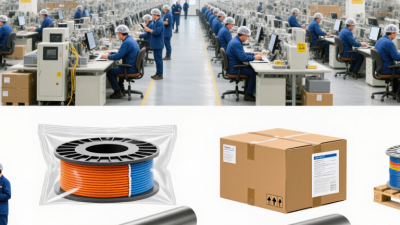
Selecting the right cable starts with the route, not the catalogue. Map each section: duct, aerial span, or direct burial. Then check pulling tension, crush resistance, temperature range, water blocking, and UV exposure against site conditions. For long outdoor links, OS2 single-mode fibre is usually practical; multimode suits shorter links when the installed optics support it. Leave spare fibres for repairs or growth. It costs little on paper, but the right count depends on the project.

The ITU’s Facts and Figures 2024 estimates that 5.5 billion people used the internet that year. That growing demand makes future capacity worth considering, not guessing. Specify cable performance against the applicable IEC 60794 requirements, then verify the manufacturer’s test records, reel length, markings, and traceability. At installation, inspect the sheath and closures, check continuity, and measure insertion loss. Use OTDR traces to locate faults or unexpected events, while interpreting them alongside loss measurements.

One judgment call remains: a cable that passes today may leave too little slack for a later splice or reroute. I would verify bend limits at the actual closure, not just on a clean datasheet.