Why Choose Loose Tube Fibre Cable for Global Networks?
Global networks demand fibre infrastructure that can survive distance, weather, and changing installation conditions. Loose tube fibre cable is often selected because its fibres remain protected inside flexible, gel-filled or dry buffer tubes. This design helps reduce stress during temperature changes, pulling, and long outdoor routes. It suits backbone links, data centre connections, telecom corridors, and rural deployments.
Field experience shows that cable performance depends on more than fibre count. Installers must check bend radius, pulling tension, water blocking, sheath material, and joint closure compatibility. A cable crossing a wet roadside trench needs different protection from one installed inside a controlled facility. Small details matter. Poor preparation can waste an otherwise excellent cable.
Reliable projects also depend on recognised testing procedures and documented installation records. Optical time-domain reflectometer results, insertion-loss measurements, and visual inspections can reveal problems before customers notice them. Manufacturers may publish impressive specifications, but independent verification remains valuable. Not every route needs the same construction. That assumption can fail.
Loose tube fibre cable offers a practical balance between protection, flexibility, and future capacity. Its separated fibre structure can simplify splicing and maintenance when technicians work in difficult conditions. Still, it is not a universal answer. Direct burial, aerial installation, fire requirements, and local regulations must guide the final choice. Engineers should compare real site evidence, not rely on marketing language alone. A carefully matched cable can support stable global connectivity for decades, although no design removes every maintenance risk.
What Is Loose Tube Fibre Cable?
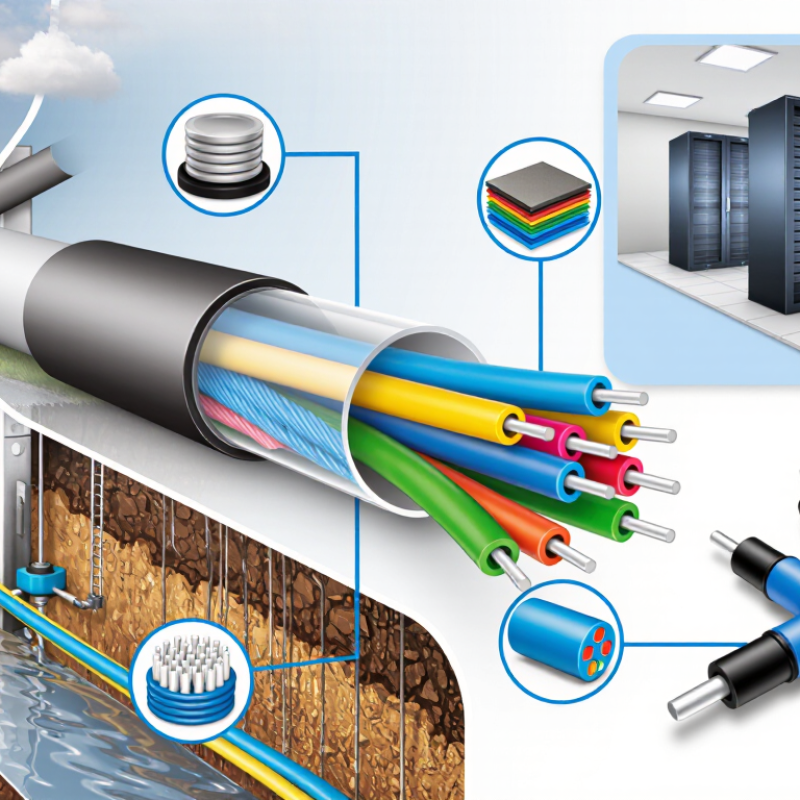
Loose tube fibre cable places optical fibres inside semi-rigid tubes, rather than binding them tightly to the cable jacket.
Each tube holds several fibres with spare space around them. That space lets fibres move slightly when temperatures change or the cable bends. A water-blocking gel or dry compound helps limit moisture movement.
Think of it as a small protective sleeve around delicate glass.
The structure suits long routes and difficult outdoor conditions. It can tolerate pulling tension, vibration, freezing nights, and hot roadside ducts.
IEC 60794 testing addresses mechanical, environmental, and transmission performance for optical fibre cables. This matters as global connectivity expands.
The ITU’s Facts and Figures 2023 report counted 5.4 billion Internet users, representing about 67% of the world’s population. The OECD Broadband Statistics update in 2024 also showed fibre reaching roughly 42% of fixed broadband subscriptions across OECD economies.
Field technicians often choose loose tube designs for backbone, access, and intercity networks. Extra fibres can remain dark until demand grows.
That is useful, but not magic. Poor sealing, careless stripping, or excessive bending can still cause attenuation.
Installation quality remains decisive. I have seen a robust cable underperform because a small closure admitted water.
The specification looked excellent. The workmanship did not. Engineers should match fibre count, span length, duct conditions, and repair practices before selecting the cable.
Where Is Loose Tube Fibre Cable Used in Global Networks?
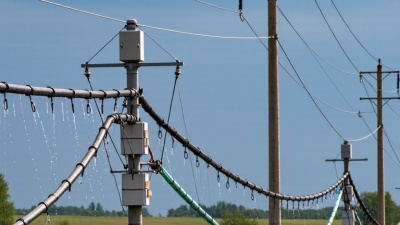
Loose tube fibre cable is widely used where global networks leave controlled buildings and face open environments. Its fibres sit inside loose tubes, allowing movement during temperature changes and installation. This design suits underground ducts, direct-buried routes, and aerial spans between cities. Technicians often choose it for backbone links because it tolerates vibration, moisture, and moderate pulling stress. Still, no cable fits every route.
Across continents, operators install it along highways, rail corridors, utility rights-of-way, and rural access routes. In a buried duct, the cable carries traffic between regional data centres and metropolitan exchange points. On poles, reinforced versions cross long valleys or farming areas where trenching is expensive. Coastal and industrial zones may also use protected constructions, especially where salt, dust, or changing temperatures challenge the sheath. Field teams should verify local burial depth, fire rules, bend limits, and fibre counts before ordering.
Loose tube cable also appears in campus links, wind farms, ports, and large transport systems.
These projects need stable connections over long distances, not just high capacity on paper. Installation records matter. A misplaced splice or poorly sealed closure can weaken an otherwise strong route. Experience shows that water protection and repair access deserve as much attention as optical performance. Some planners still assume one construction works worldwide, but climate and civil standards differ sharply. That assumption needs review.
What Benefits Does It Offer for Long-Distance Connectivity?
Why Choose Loose Tube Fibre Cable for Global Networks?
Long-distance networks face changing temperatures, moisture, vibration, and difficult installation conditions. Loose tube fibre cable protects optical fibres inside gel-filled or dry buffer tubes. The fibres can move slightly as temperatures change. This reduces mechanical stress during expansion and contraction.
That protection matters across highways, rail corridors, data centres, and submarine landing areas. Loose tube designs also support high fibre counts without making the cable excessively difficult to handle. Technicians can access individual tubes during repairs or network upgrades. This can reduce service disruption and simplify maintenance planning. However, the cable is not a perfect solution. Poor sealing, excessive pulling force, or careless bending can still damage the fibre. Installation quality remains critical, especially over long routes with many connection points.
Tips: Check the cable’s tensile rating, bend radius, water-blocking design, and temperature range before deployment. Leave proper slack in closures and cabinets. Use approved splicing procedures. Keep records of route conditions and test results. Small details matter.
For global connectivity, loose tube fibre cable offers a practical balance between protection, capacity, and serviceability. Its performance depends on the entire link, not the cable alone. Engineers should review terrain, climate, repair access, and future bandwidth needs before selecting a design. A cheaper cable may appear efficient at purchase, yet create higher maintenance costs later. That trade-off deserves honest review.
Why Choose Loose Tube Fibre Cable for Global Networks?
Loose tube fibre cable keeps the optical fibres isolated from external mechanical stress, moisture and temperature-related expansion. This makes it well suited to long-distance aerial, underground and duct deployments. The chart uses the ITU-T G.652.D maximum attenuation limits of 0.40 dB/km at 1310 nm and 0.30 dB/km at 1550 nm, excluding splice and connector losses.
At the same distance, the lower attenuation at 1550 nm helps reduce optical power loss, while the loose tube structure supports reliable performance across extended network routes and changing outdoor conditions.
How Should Loose Tube Fibre Cable Be Selected and Installed?
Why Choose Loose Tube Fibre Cable for Global Networks?
How Should Loose Tube Fibre Cable Be Selected and Installed?
Selecting loose tube fibre cable starts with the route, not the catalogue. Outdoor ducts, direct-buried sections, towers, and long spans need different protection. Choose single-mode fibre for international and metropolitan links. ITU-T G.652.D specifies attenuation targets of about 0.30 dB/km at 1550 nm and 0.40 dB/km at 1625 nm. These figures support longer spans, but real losses also come from splices, connectors, bends, and ageing.
Water protection deserves careful attention. Gel-filled tubes can block water effectively, while dry designs simplify preparation and reduce cleanup. Select the design according to moisture risk, maintenance practice, and local temperature changes. Check fibre count, tensile strength, crush resistance, flame rating, and rodent protection. IEC 60794-1-1 provides a useful framework for mechanical and environmental testing. The International Telecommunication Union reported 5.4 billion internet users in 2023, increasing pressure on reliable backbone infrastructure.
Installation errors are often less dramatic than expected. They are simply expensive. Follow the stated pulling tension and minimum bend radius. Do not drag cable across sharp duct edges. Seal unused ducts and protect every entry point from water. Leave measured slack in closures and splice chambers, rather than forcing tight coils. After installation, inspect connectors, test insertion loss, and record OTDR traces at 1310, 1550, or 1625 nm. Technicians sometimes skip a second test after backfilling. That decision can hide a crushed section for years. Even a careful design may need revision when soil movement, access limits, or unexpected duct congestion appears.