
China Top 10 FO Cable Manufacturers for Global Buyers?
Choosing among China’s top 10 fo cable manufacturers requires more than comparing prices or polished websites. Global buyers need evidence from the factory floor. This introduction outlines a practical review of manufacturers serving telecommunications, data centers, industrial networks, and infrastructure projects. It considers production capacity, fiber standards, attenuation control, bend performance, tensile strength, connector quality, packaging, and export documentation. Small details matter. A crushed reel can ruin a shipment.
Dr. Charles K. Kao, a pioneer of fiber-optic communications, observed that “the potential of optical fibre communication is enormous.” That principle still shapes today’s fo cable market. However, potential alone does not guarantee dependable supply. Manufacturers must show repeatable test records, clear technical datasheets, traceable materials, and responsive engineering support. Factory audits, sample testing, and independent verification remain valuable. Claims should not be accepted blindly.
This guide compares ten prominent Chinese manufacturers through a buyer-focused lens. It examines their product range, customization ability, delivery performance, certifications, and experience with overseas orders. Some companies may excel in armored outdoor cable, while others perform better with compact data-center designs or pre-terminated assemblies. No ranking is perfect. Public information can be incomplete, and supplier capabilities may change. Buyers should confirm current capacity before signing contracts. A strong supplier is not always the cheapest. Reliability usually appears in less visible places: consistent color coding, sealed ends, accurate reel lengths, and careful responses when problems occur. Mistakes happen. The meaningful test is how professionally a manufacturer corrects them.
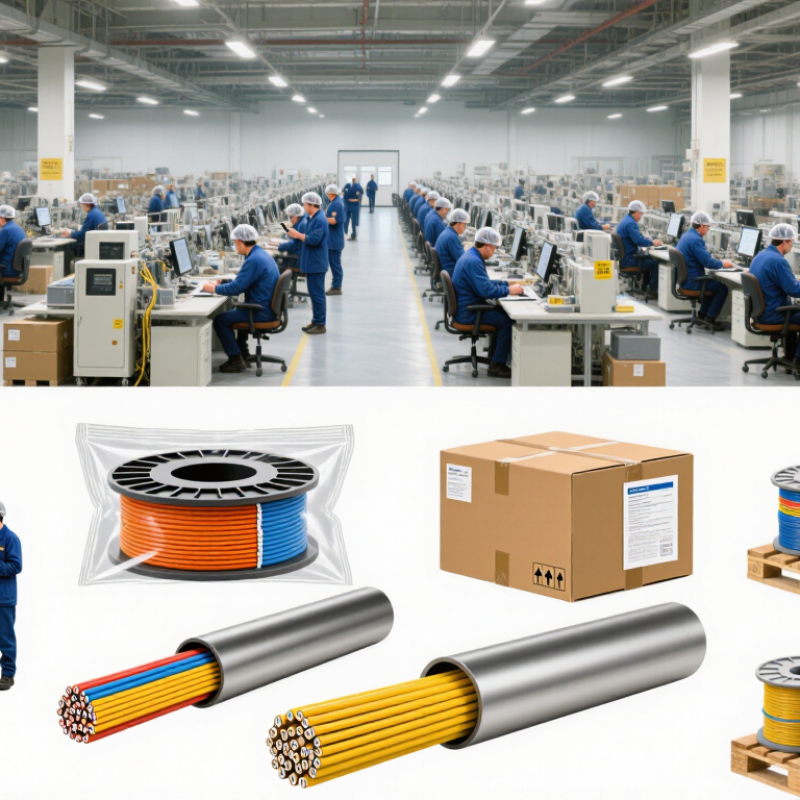
What FO Cables Are and Why Chinese Manufacturers Matter
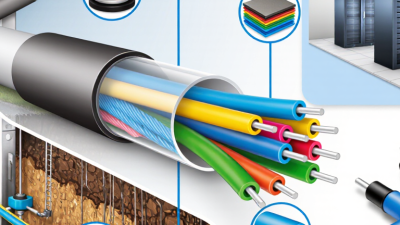
Fiber optic (FO) cable carries data as pulses of light through glass or plastic fibers. Its core, cladding, coating, and outer jacket protect fragile transmission paths. Unlike copper, it resists electromagnetic interference and supports high bandwidth over long distances. This makes it useful in data centers, telecom networks, industrial sites, and building links. The cable is thin. Yet installation errors can damage performance.
Chinese manufacturers matter because China combines large-scale material sourcing, mature factory equipment, and experienced export logistics. Many producers can develop single-mode, multimode, armored, outdoor, or indoor cables for different environments. They may adjust fiber counts, jacket materials, connector types, drum lengths, and printed markings. This flexibility helps global buyers match local projects instead of accepting one fixed design. Factory visits, sample testing, and production records offer stronger evidence than a polished catalogue.
Reliable purchasing requires more than a low quotation. Buyers should request attenuation, insertion-loss, tensile-strength, flame-rating, temperature, and bend-performance data. Independent testing can confirm these claims. Check traceability from fiber batch to finished reel, and inspect packaging before shipment. Standards and market approvals must fit the destination country. Quality is not uniform across every supplier. A recurring field lesson is simple: small specification gaps can create costly rework. Clear drawings, written tolerances, inspection plans, and realistic delivery schedules deserve attention before ordering.
China Top 10 FO Cable Manufacturers for Global Buyers? – What FO Cables Are and Why Chinese Manufacturers Matter
A practical comparison of ten widely manufactured fiber-optic cable categories and the technical benchmarks global buyers commonly review.
| No. | FO Cable Category | Typical Fiber Type | Common Structure | Typical Application | Relevant Standards | Key Buyer Evaluation Point | Typical Design Consideration |
|---|---|---|---|---|---|---|---|
| 1 | Outdoor Loose-Tube Cable | Single-mode OS2 | Gel-filled or dry loose tubes with central strength member | Long-distance backbone, metro networks and duct routes | IEC 60794; ITU-T G.652.D | Water blocking, crush resistance and installation tensile strength | Usually selected for outdoor routes where fiber protection and low attenuation are important |
| 2 | Armored Direct-Burial Cable | Single-mode OS2 | Loose-tube design with steel or non-metallic armor | Direct-buried telecom and campus backbone installations | IEC 60794; IEC 60331 where fire-survival performance is specified | Mechanical protection, corrosion resistance and local burial requirements | Armor improves resistance to rodents and external mechanical damage but can increase cable weight |
| 3 | ADSS Aerial Cable | Single-mode OS2 | All-dielectric stranded loose-tube construction | Overhead power-line corridors and utility poles | IEC 60794; IEEE 1222 for ADSS-related performance evaluation | Span length, wind and ice loading, sag and electrical-field conditions | Metal-free construction helps avoid conductive coupling near energized lines |
| 4 | Figure-8 Self-Supporting Cable | Single-mode OS2 or multimode OM3/OM4 | Fiber cable bonded to an integrated messenger wire | Aerial access networks and short-to-medium pole spans | IEC 60794; national aerial-cable specifications | Messenger strength, suspension hardware compatibility and weather resistance | Integrated support wire can simplify deployment where separate lashing is not preferred |
| 5 | Microduct Blown-Fiber Cable | Single-mode OS2 | Compact, low-friction cable optimized for air blowing | High-density fiber expansion in microduct systems | IEC 60794; installation requirements defined by the microduct system | Outer diameter, blowing distance, friction coefficient and cable stiffness | Small diameter allows additional cables to be installed in existing duct capacity |
| 6 | Indoor Distribution Cable | Single-mode OS2 or multimode OM3/OM4 | Tight-buffered or mini loose-tube construction | Data centers, telecom rooms and building risers | IEC 60794; IEC 60332; IEC 60754; IEC 61034 where applicable | Fire performance, bend radius, termination method and routing flexibility | Indoor cables are commonly specified with low-smoke, halogen-free materials for occupied spaces |
| 7 | FTTH Drop Cable | Single-mode bend-insensitive G.657.A1 or G.657.A2 | Flat or round compact cable with one or more strength members | Fiber-to-the-home and last-mile subscriber connections | ITU-T G.657; IEC 60794 | Small bend radius, stripping performance, connector compatibility and installation speed | Low-bend-loss fiber supports tight routing around customer premises and access boxes |
| 8 | Data-Center Trunk Cable | Multimode OM3/OM4 or single-mode OS2 | High-fiber-count trunk with factory-terminated connectors | Server rooms, leaf-spine networks and inter-rack links | IEC 61754 connector interfaces; ISO/IEC 11801 cabling practices | Polarity, insertion loss, return loss, labeling and fiber-count scalability | Factory termination can reduce installation time and maintain consistent end-face quality |
| 9 | Ribbon Fiber Cable | Single-mode OS2 | Multiple fibers arranged in bonded ribbons inside a protective core | Large-scale access, metropolitan and outside-plant networks | IEC 60794; ITU-T G.652.D or G.657 where specified | Mass-fusion splicing efficiency, fiber count, water blocking and cable diameter | Ribbon construction supports rapid high-count splicing and efficient use of duct space |
| 10 | Mining or Industrial-Ruggedized Cable | Single-mode OS2 or multimode OM3/OM4 | Reinforced jacket with enhanced crush, impact and environmental protection | Factories, transportation systems, mines and harsh industrial sites | IEC 60794; IEC 60332 and project-specific mechanical requirements | Impact resistance, oil or chemical exposure, temperature range and flame performance | Construction should be matched to the actual industrial hazards rather than selected by fiber count alone |
Note: This table compares commonly supplied FO cable categories rather than ranking named companies or brands. Actual specifications, test methods, available fiber counts, sheath materials and compliance documentation should be confirmed against the project’s bill of materials and the manufacturer’s technical datasheet.
Related Posts
-
China Best Fibre Cable Manufacturers How to Choose?
-
Top 10 Fibre Optic Network Cable Types for Buyers
-
10 Fibre Optic Cable Buying Tips for Global Buyers
-
Why Choose Loose Tube Fibre Cable for Global Networks?
-
Top 6F Cable Manufacturers for Global Buyers?
-

What is Fibre Drop Cable and Its Uses in Network Installation