China Top Low Friction Cable Manufacturers for Global Buyers
China has become a major sourcing base for control cables, bicycle cables, automotive cables, and industrial transmission systems. For global buyers, choosing the right low friction cable manufacturer requires more than comparing quoted prices. Material quality, dimensional control, coating consistency, and production traceability can directly affect performance.
This guide examines Chinese manufacturers serving international markets. It focuses on practical evidence, including factory capabilities, testing procedures, customization experience, and export support. Strong suppliers should explain their cable construction clearly. They should also provide information about wire materials, liners, coatings, tensile strength, bending cycles, and operating temperatures. Details matter. A smooth cable surface may reduce resistance, but poor end fittings can still create drag.
Reliable evaluation also requires attention to documentation. Buyers should review sample results, quality records, inspection methods, and relevant compliance statements for the destination market. Certifications can support trust, but they do not replace independent testing or careful sample approval. A polished catalog is not enough. Not every supplier fits every application.
The manufacturers discussed in this overview may serve different requirements, from compact control systems to demanding outdoor equipment. Their strengths can vary by product range, order volume, tooling support, and delivery capability. Some may offer impressive customization but limited small-batch flexibility. Others may provide stable production yet need clearer technical communication. This guide recognizes those limitations and encourages buyers to verify claims directly. With a structured comparison, global purchasers can identify a suitable partner for dependable performance, consistent quality, and long-term cooperation.
What Low-Friction Cables Are and Why Global Buyers Need Them
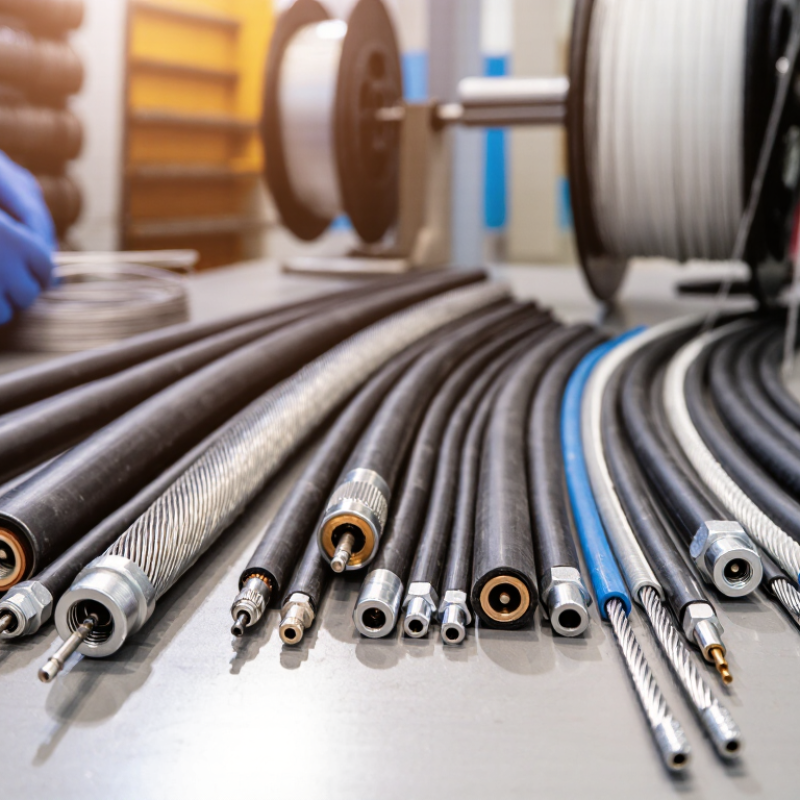
Low-friction cables use specialized jacket materials, smooth surfaces, and flexible constructions to reduce sliding resistance during movement. They are common in drag chains, robotic arms, automated storage systems, and moving inspection equipment. The term is not perfectly standardized. A supplier should define friction, bend radius, torsion, temperature, and tested service life.
In its Electricity 2024 report, the International Energy Agency expects global electricity demand to rise 3.3% annually from 2024 to 2026. More power infrastructure means more moving equipment and tighter installation constraints. The International Federation of Robotics reported 541,302 industrial robot installations in 2023, a 10% increase. In these systems, excess drag can raise motor load, heat, noise, and maintenance frequency. Yet “low friction” alone proves little. A thin jacket may slide well initially, then crack after repeated flexing. That uncomfortable detail deserves attention. For global buyers, test records matter more than attractive catalog language.
Tips: Request coefficient-of-friction data, cycle-test results, and videos under load. Match the cable to actual travel speed, bend radius, oil exposure, and ambient temperature. Ask whether samples were tested with the intended carrier and connector. Small mismatches become expensive quickly.
Low-friction cable performance depends heavily on the liner or jacket material. Under dry, room-temperature sliding conditions against polished steel, PTFE and UHMWPE typically provide lower friction than nylon, PVC, and rubber. Lower friction can help global buyers reduce operating force, improve cable response, and extend service life, although actual results vary with load, surface finish, temperature, lubrication, and cable construction.
Key Performance Features of China’s Low-Friction Cable Industry
China’s low-friction cable industry focuses on stable movement, controlled wear, and predictable service life. In cable carriers, reduced sliding resistance lowers pulling force and heat buildup. Field testing often checks bend radius, tensile strength, insulation recovery, and repeated flexing.
The 2024 MarketsandMarkets wire and cable report valued the global market at over USD 200 billion, with industrial automation driving specialized cable demand. This growth raises buyer expectations. Low-friction designs usually combine fine-stranded copper conductors, flexible insulation, and smooth outer jackets. According to IEC 60227 and IEC 60245 principles, insulation quality must remain stable under rated voltage and movement. Small details matter. A rough jacket can increase drag quickly.
China-based suppliers increasingly use robotic flex testing and batch resistance checks. A cable rated for millions of bending cycles sounds impressive, but test speed, bend radius, temperature, and load must be disclosed. Otherwise, comparisons become weak. The UL Solutions 2023 electrical safety outlook also emphasizes traceability and verification across cable supply chains. Buyers should request test records, material certificates, and sample inspections before bulk orders.
Some specifications remain unclear. That is a practical concern. A lower friction coefficient may not guarantee longer life when dust, oil, or sharp bending is present. Reliable evaluation should reproduce the buyer’s actual routing conditions, including travel distance, acceleration, temperature, and carrier geometry.
How to Evaluate Suppliers, Materials, and Manufacturing Standards
China Top Low Friction Cable Manufacturers for Global Buyers
Selecting a low-friction cable supplier requires more than comparing unit prices. Ask for friction coefficients, tensile results, coating thickness, and batch traceability. PTFE, nylon, and UHMWPE reduce sliding resistance, but each suits different temperatures and loads. Grand View Research valued the global PTFE market at about USD 3.3 billion in 2022, showing its broad industrial use. Still, material popularity does not prove suitability. A supplier should provide test conditions, not only attractive catalog figures.
Manufacturing standards reveal process discipline. Check ISO 9001 certification, calibration records, incoming-material controls, and corrective-action reports. The ISO Survey 2022 recorded 1,265,216 ISO 9001 certificates worldwide. Certification matters, but an unverified certificate is weak evidence. Request recent audit reports and sample inspection records. For steel wire components, compare testing practices with ASTM A1023/A1023M or EN 12385 requirements. For coated products, confirm abrasion, salt-spray, temperature, and cyclic-bending results. A polished sample can still hide inconsistent production. I would test multiple batches.
Tips: Send the same technical drawing to three suppliers. Require a pre-production sample and a signed inspection plan. Measure pull force, bend radius, surface damage, and movement after repeated cycles. Record every result. Do not rely on a single laboratory report. Ask who performed the test, which instrument was used, and when calibration occurred. Some suppliers may resist these questions. That resistance is useful information.