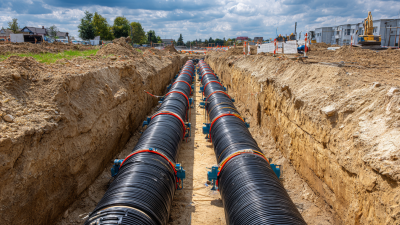
Transforming Connectivity: The Future of Fibre Optic Infrastructure in Smart Cities
As urban environments evolve into smart cities, the demand for reliable and high-speed communication networks becomes increasingly critical. At the heart of this transformation is the fibre optic infrastructure, which offers unparalleled bandwidth and connectivity benefits essential for supporting various smart applications, from traffic management to smart grids and beyond. This introduction aims to explore how the implementation and enhancement of fibre optic infrastructure can lead to greater efficiency and innovation in urban settings. By examining best practices and strategies, we will uncover the transformative potential of fibre optics in constructing resilient, responsive, and interconnected urban landscapes. Ultimately, understanding how to effectively integrate fibre optic technology into city planning will be key to meeting the demands of future urban scenarios while ensuring sustainable growth and improved quality of life for all residents.

Advantages of Fibre Optic Infrastructure in Smart Cities for Enhanced Connectivity
The deployment of fibre optic infrastructure is revolutionizing connectivity in smart cities, offering unparalleled advantages over traditional copper networks. According to a report by the International Telecommunication Union (ITU), fibre optic cables can transmit data at speeds up to 100 Gbps, significantly outperforming conventional networks which typically offer speeds of just a few Mbps. This enhanced capacity is essential in smart cities, where the demand for high-speed internet is soaring due to the proliferation of IoT devices, autonomous vehicles, and real-time data analytics applications.
Moreover, fibre optics are known for their reliability and lower latency, crucial for the seamless functioning of smart city services. The Cisco Visual Networking Index forecasts that by 2023, the number of connected devices will reach 29.3 billion globally, with a substantial portion expected to operate within urban settings. The resilience of fibre optic networks in adverse weather conditions and their immunity to electromagnetic interference make them ideal for urban environments where system uptime is critical. The promotion of fibre optic infrastructure ultimately supports more robust communication systems, paving the way for advanced applications, including smart transportation, energy management, and enhanced public safety measures.
Key Technologies Driving Fibre Optic Deployment in Urban Environments
The deployment of fibre optic infrastructure is crucial for the evolution of smart cities, driven largely by innovative technologies that enhance connectivity. Key advancements, such as 5G and 4G technologies, are revolutionizing urban environments by facilitating faster data transmission and improved network capacity. This enables a myriad of applications ranging from smart transportation systems to enhanced public safety measures. As cities embrace digital transformation, the integration of fibre optics becomes the backbone for reliable communication networks, supporting everything from commercial enterprises to residential connectivity.
Moreover, innovative financing models are being explored to accelerate the implementation of this infrastructure. Municipal governments are increasingly collaborating with private sector partners to establish private 5G networks, creating sustainable funding avenues for urban connectivity projects. This strategic partnership not only alleviates the financial burden on public resources but also accelerates the deployment of advanced fibre optic systems. By fostering these collaborations, cities position themselves to meet the rising demand for high-capacity broadband services, ultimately enhancing the quality of life for their residents.

Industry Trends: Projected Growth of Fibre Optics in Smart City Development by 2025
The proliferation of smart cities is set to revolutionize urban living, with fibre optic infrastructure emerging as a key enabler. By 2025, industry analysts project a significant growth in the adoption of fibre optics, driven by increasing demands for high-speed internet and reliable connectivity. The integration of smart technologies in urban environments necessitates robust communication systems that can handle vast amounts of data traffic, making fibre optics an indispensable element in the development of these modern cities.
Tip: When considering investments in fibre optic technologies, prioritize scalability and future-proofing. As urban demands evolve, it's crucial to adopt solutions that can be easily upgraded or expanded to support emerging technologies such as IoT and AI.
Moreover, the enhanced bandwidth provided by fibre optics not only facilitates smoother everyday operations but also fosters innovation across various sectors, including transportation, healthcare, and public safety. Cities that embrace these advancements will likely experience improved efficiency and sustainability.
Tip: Partnering with local governments and technology providers can help streamline the deployment of fibre optic networks. Collaborative efforts can lead to shared resources and reduced operational costs, ultimately benefiting both the community and stakeholders involved.

Strategies for Integrating Fibre Optics into Existing Urban Networks
The integration of fibre optics into existing urban networks is crucial for developing smart cities, where high-speed connectivity and data exchange are paramount. A recent report from the International Telecommunication Union (ITU) indicates that cities with advanced fibre optic infrastructure can support up to 100 Gbps internet speeds, enabling enhanced services such as smart traffic management, energy efficiency, and real-time public safety analytics. By prioritizing the deployment of fibre optics, cities can significantly improve operational efficiencies and citizen engagement.
To successfully incorporate fibre optics into urban environments, municipalities must employ strategic planning and public-private partnerships. According to a study by Deloitte, cities that adopt a collaborative approach see a 30% decrease in implementation costs and a 20% faster deployment time. Moreover, leveraging existing infrastructure, such as utility poles and underground conduits, can facilitate a smoother upgrade process. By integrating fibre optics with IoT devices, cities can gather valuable data that drives smarter decision-making, fostering a more connected, responsive urban landscape.
Transforming Connectivity: The Integration of Fibre Optics in Smart Cities
This chart illustrates the growth of fibre optic installation in smart cities from 2019 to 2023. The increase in installation kilometers reflects the push towards better connectivity and the integration of advanced technologies in urban infrastructure.
Case Studies: Successful Implementation of Fibre Optic Solutions in Global Smart Cities
In the realm of smart cities, the implementation of fibre optic infrastructure has proven to be a game changer. Taking Seoul as a prime example, the city successfully integrated a comprehensive fibre optic network that supports high-speed internet access and enhances various urban services. This network facilitates real-time data exchange, which is essential for managing traffic flow, public safety, and energy consumption. The result is not only increased efficiency but also improved quality of life for residents, showcasing how robust connectivity can transform urban environments.
Another notable case is Barcelona, where the city has leveraged fibre optic technology to create an interconnected ecosystem. The city's Smart City initiative incorporates smart lighting, waste management, and transportation systems that rely on fibre optic connections. This infrastructure supports the seamless exchange of data between devices, allowing for better resource management and responsiveness to citizen needs. By embracing fibre optics, Barcelona exemplifies how cities can harness technology to foster innovation and sustainability in urban development.
Transforming Connectivity: The Future of Fibre Optic Infrastructure in Smart Cities
| City |
Country |
Fibre Optic Reach (km) |
Population Served |
Implementation Year |
Key Benefits |
| Barcelona |
Spain |
500 |
1.6 million |
2015 |
Enhanced Internet Speed, Smart Lighting |
| Songdo |
South Korea |
800 |
100,000 |
2010 |
IoT Integration, Real-time Data Analysis |
| Amsterdam |
Netherlands |
600 |
850,000 |
2018 |
Smart Waste Management, Improved Connectivity |
| Singapore |
Singapore |
1000 |
5.6 million |
2016 |
High-Speed Internet, E-Government Services |
| Dubai |
UAE |
1200 |
3 million |
2017 |
Smart Tourism, Efficient Public Services |