Choosing a fibre optic cable in 2026 is less about finding one universal winner and more about matching glass, construction, and installation to the job. The Fiber Broadband Association’s 2024 Fiber Deployment Annual Report tracks continued expansion of fibre networks, while ITU’s Facts and Figures 2024 estimates that 5.5 billion people were online. Neither report ranks cable designs, but together they show why capacity and reliable deployment remain important.
The main options include single-mode fibre for long-distance links, multimode fibre for shorter premises connections, and ribbon cable for dense installations. Bend-insensitive designs help where routes turn tightly behind a wall panel. Armoured and outdoor-rated cables address different physical conditions; they are not automatic upgrades for every site. Optical-fibre pioneer Charles K. Kao’s work demonstrated that reducing signal loss in glass could make long-distance optical communication practical. That principle still informs today’s choices.
Small details matter. A data-centre aisle may favour compact, high-density cabling, while a long outside-plant route needs suitable environmental protection. Check connector compatibility, loss budgets, installation conditions, and applicable specifications before comparing price alone. Standards and product availability can change, so verify current datasheets rather than relying on a familiar label. Honestly, “top” can be a slippery word: the best cable on paper may be the wrong one in a cramped tray. This guide compares the leading fibre optic cable types, their typical uses, and the trade-offs that shape a sound 2026 decision.
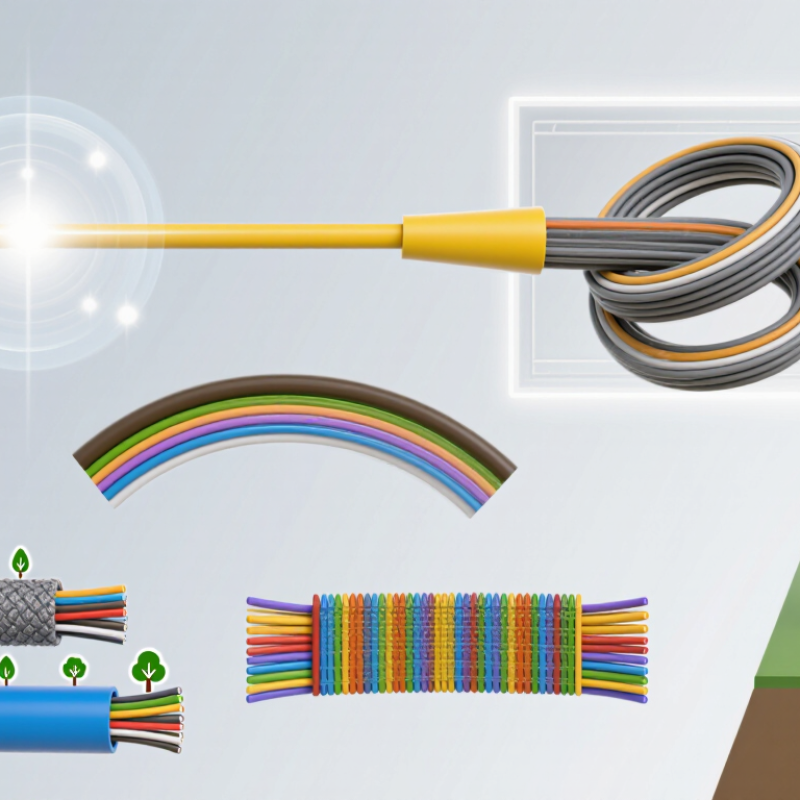
A fibre optic cable carries information as pulses of light through thin strands of glass. Each strand has a central core, a surrounding cladding, and protective outer layers. The cladding reflects light back into the core, guiding pulses along the cable. Light moves fast. At the receiving end, a transceiver converts those pulses into electrical signals that network equipment can interpret. In practice, connectors, bends, and dirty end faces can weaken the signal. That detail is easy to underestimate.
Single-mode fibre uses a very narrow core to carry light over long distances with limited signal spreading. Multimode fibre has a wider core and is commonly used for shorter links, such as connections between equipment in a data centre. ITU-T Recommendation G.652 defines characteristics for widely deployed single-mode fibre; it is a technical standard, not a promise that every installation will perform identically. Cable choice also depends on transceiver compatibility, distance, and the route’s physical conditions.
The scale of connectivity makes this infrastructure more than a specialist concern. The International Telecommunication Union’s Facts and Figures 2024 estimated that 5.5 billion people were using the internet worldwide. That figure does not measure fibre use directly, but it illustrates the demand carried by communication networks. A useful lesson from field work is that the cable itself is only one part of a link: installation quality and careful testing matter, too. And sometimes, the “best” cable is simply the one that suits the actual route.
Single-mode and multimode fibre cables differ mainly in how they carry light. A single-mode core is very narrow, typically about 9 micrometres across. It guides light along a nearly direct path, which helps limit signal spreading over long distances. This makes it a common choice for links between buildings, across campuses, and through regional networks. Distance matters.
Multimode fibre has a wider core, commonly 50 or 62.5 micrometres. Several light paths travel through it, so signals can spread more over distance. It is often used for shorter links inside data centres or buildings, where equipment rooms may sit a few dozen metres apart. The broader core can make alignment less demanding, but that does not mean every installation is simple. Connector cleanliness, cable routing, and compatible optical transceivers still matter.
Choosing between them depends on the link budget, required distance, data rate, and existing equipment—not just cable price. A short connection may work well with either type, while a long run can make multimode’s limits costly. Check the transceiver specifications and measure the actual route before ordering. I have seen planning focus on the cable alone; that is an easy detail to overlook. It is not always the right choice on paper.
At 10 Gb/s, 10GBASE-SR supports links up to 300 m on OM3 and 400 m on OM4 or OM5 multimode fibre. 10GBASE-LR supports links up to 10 km on single-mode fibre. These are standard link limits for the specified fibre and optical interface; actual supported distance depends on the complete link design.
What Are the Top Fibre Optic Cable Types in 2026?
Data centres and telecom networks need different fibre for different distances. Inside a data centre, multimode fibre such as OM4 or OM5 can suit short links between racks, where compatible optics and planned reach matter. For longer runs or future capacity upgrades, singlemode fibre is often the more flexible choice. Check the transceiver specifications before selecting cable; the wrong combination can limit link performance. Small details count.
Telecom networks commonly use OS2 singlemode fibre for links between buildings, cabinets, and access points. Outdoor routes may need cables designed to resist moisture, pulling forces, and temperature changes. Installation quality matters just as much as cable type: tight bends, dirty connectors, or poorly recorded routes can cause trouble later. A neat cable tray is not proof of a healthy link, either. Testing is essential.
Tips: Match fibre type to distance, optics, and expected upgrades. Keep bend radius within the cable maker’s guidance, label both ends, and inspect connectors before testing. Document results. One overlooked patch lead can complicate fault-finding.
What Are the Top Fibre Optic Cable Types in 2026?
Fibre cable choice depends on distance, data needs, and installation conditions. Single-mode fibre has a narrow core and carries signals over long distances with low signal loss. It suits campus links and wide-area networks.
Multimode fibre uses a wider core, making it practical for shorter runs inside buildings and data centres. It can be easier to deploy over modest distances, but bandwidth and reach depend on the fibre grade and equipment. Neither type is universally better.
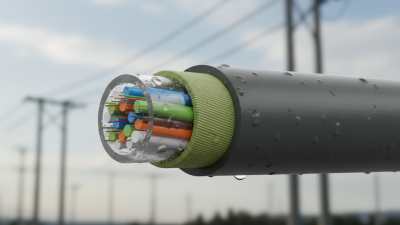
Construction matters outdoors and indoors. Tight-buffered cables protect each fibre with a close-fitting coating, which helps during indoor routing and termination. Loose-tube designs place fibres inside protective tubes, often with water-blocking materials for outdoor use. Armoured cable adds a tougher layer for locations exposed to crushing or rodents, though it is heavier and less flexible.
A cable that looks rugged can still be poorly suited to a tight conduit. Check bend limits, temperature ratings, connector compatibility, and the full route before specifying it. Small installation details are easy to miss.
Tips: Match the cable to the route, not just the data rate. Measure conduit space and expected pulling tension. If the environment is uncertain, ask an installer to review the path; a site plan rarely shows every awkward bend.
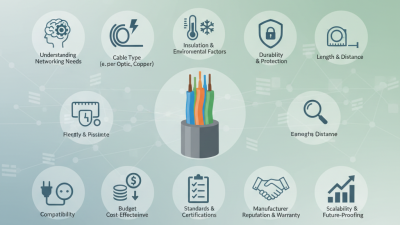
Choosing a fibre optic cable starts with distance, bandwidth, and installation conditions—not the highest number on a product sheet. Single-mode cable, commonly specified as OS2, suits long links between buildings and across campuses. Multimode options such as OM4 and OM5 are often practical for shorter data-centre connections. The ITU’s Facts and Figures 2024 estimates that 5.5 billion people were online, reinforcing the demand for dependable network capacity. That figure describes internet use, not cable performance, so treat it as context rather than a sizing rule.
Check the transceiver requirements, connector type, and expected link length before ordering. Then assess the route: tight bends, outdoor exposure, moisture, and frequent movement can all affect cable selection. For indoor installations, confirm the required fire-safety rating under local building rules. For bend-sensitive routes, review whether a bend-insensitive single-mode specification, such as ITU-T G.657, is appropriate. Standards help, but real site conditions still matter.