What Are the Top Chinese Ports for Global Maritime Trade?
China’s ports are more than busy dots on a shipping map. They connect factories, inland railways, container yards, and overseas markets. For businesses planning routes, the leading port depends on cargo type, destination, schedule, and available services. A high container volume matters, but it does not answer every practical question.
Shanghai is a major global hub, while Ningbo-Zhoushan is known for vast cargo flows and deep-water access. Shenzhen serves manufacturing centers in the Pearl River Delta. Qingdao, Guangzhou, and Tianjin also link important industrial regions with international routes. Their roles differ. So do their strengths. A shipper moving electronics may value frequent sailings; a bulk-cargo operator may focus on berth access and handling capacity.
Jan Hoffmann, a maritime transport specialist associated with UNCTAD, has described maritime transport as “the backbone of international trade and the global economy.” That perspective helps explain why port performance matters beyond the quay. Yet a port’s headline ranking can hide local constraints, seasonal delays, and the cost of moving goods inland. Rankings are useful, not the whole story.
This overview compares China’s leading ports by scale, location, and trade connections. It also considers what those strengths mean for global maritime trade. The details can shift. Schedules change, and infrastructure keeps evolving. Readers should treat any single comparison as a starting point, then check current carrier services and port data before making decisions.
China’s Maritime Port Network and Its Role in Global Trade
China’s Maritime Port Network and Its Role in Global Trade
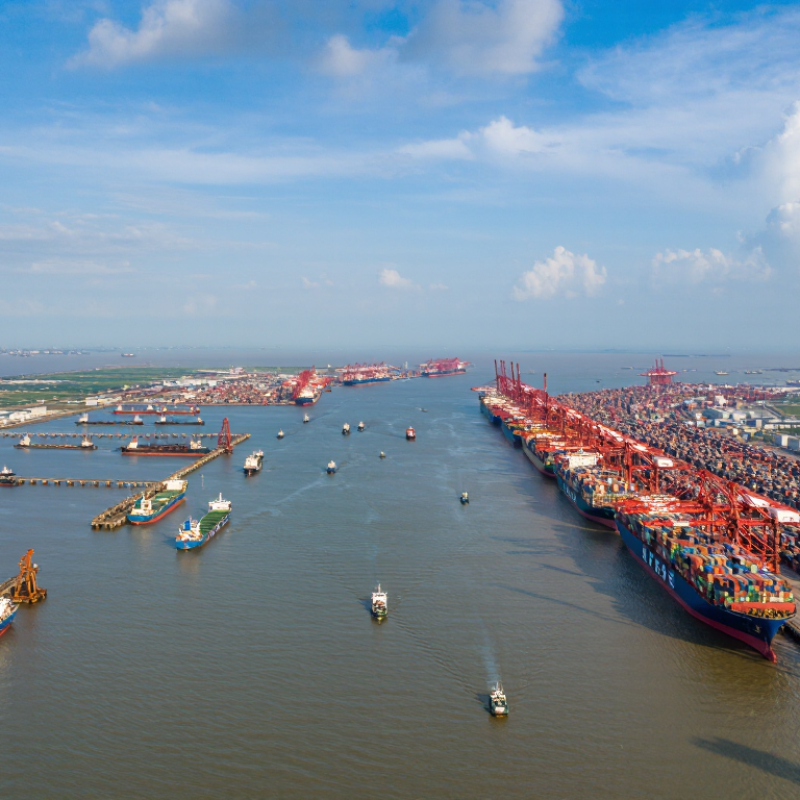
China’s ports work as a connected network, not as isolated gateways. Shanghai handles extensive container traffic, while Ningbo-Zhoushan links major shipping routes with industrial regions inland. Further south, Shenzhen serves manufacturing centers around the Pearl River Delta. Each port has distinct strengths, shaped by location, transport links, and cargo mix.
The network moves goods through container terminals, bulk facilities, rail connections, and river channels. At a busy terminal, cranes lift steel containers between ships and waiting trucks. Inland waterways and freight rail can carry cargo onward, reducing reliance on roads alone. That matters. Strong connections help manufacturers reach overseas markets and let importers access energy, raw materials, and consumer goods.
Northern ports such as Qingdao and Tianjin serve different regional needs, including industrial cargo and trade with northern China. Yet a large port does not automatically mean faster delivery. Weather, vessel schedules, customs procedures, and congestion can all affect transit times. Conditions change. Comparisons also depend on the cargo and route, so ranking ports too simply can mislead. China’s maritime network is powerful, but its performance still depends on coordination between ships, terminals, and inland transport.
Shanghai Port: A Major Gateway for Container Shipping
Shanghai Port is a major gateway for container shipping, linking coastal China with markets around the world. Its position near the Yangtze River Delta brings ocean routes close to factories, distribution centers, and inland waterways. The port complex includes terminals around Yangshan and the city’s waterfront, supporting large vessel calls and frequent cargo transfers. That geography matters. Containers can move between ships, barges, rail, and trucks, although the best option depends on destination and schedule. At working scale, coordination is as important as cranes.
The Yangshan deep-water area handles vessels that need deeper berths, while river-facing facilities connect the port with inland destinations. Digital scheduling and automated equipment can help terminals manage dense traffic and reduce some routine handling delays. Still, port efficiency is not guaranteed by technology alone. Weather, peak-season surges, customs processing, and missed connections can affect transit plans. Plans can slip. Shippers benefit from checking cut-off times, inland transfer availability, and buffer days before booking a tight delivery window.
Shanghai’s strength is its network, not simply its size. For importers and exporters, that can mean more routing choices and access to a broad sailing schedule. But the port’s scale can also create pressure: a small paperwork error or late truck arrival may ripple into later stages. This is worth remembering. A realistic plan leaves room for handoffs, rather than treating the port as a frictionless doorway.
What Are the Top Chinese Ports for Global Maritime Trade? - Shanghai Port: A Major Gateway for Container Shipping | 2023 Rank | Port | 2023 Container Throughput | Location and Trade Role |
| 1 | Shanghai | 49.16 million TEU | At the Yangtze River estuary, Shanghai is a major container gateway serving international shipping routes and the Yangtze River Delta. Its 2023 throughput was about 3.9% higher than its 2022 total of 47.30 million TEU. |
| 2 | Ningbo-Zhoushan | 35.30 million TEU | Located in Zhejiang Province, this port complex serves the Yangtze River Delta and handles substantial container and bulk cargo traffic. |
| 3 | Qingdao | 30.00 million TEU | A major port in Shandong Province, Qingdao connects northern China with international container shipping networks. |
| 4 | Shenzhen | 29.88 million TEU | Situated in southern Guangdong Province, Shenzhen is a key maritime gateway for the Pearl River Delta and nearby manufacturing regions. |
| 5 | Guangzhou | 25.41 million TEU | Located on the Pearl River, Guangzhou serves the Pearl River Delta and supports both domestic and international trade. |
| 6 | Tianjin | 22.19 million TEU | Tianjin is a major maritime gateway for Beijing, Tianjin, Hebei, and other parts of northern China. |
| Notes: Rankings are based on 2023 container throughput. TEU means twenty-foot equivalent unit, a standard measure of container capacity. Throughput figures are rounded. Port roles are summarized descriptions of their geographic and regional trade connections. Sources: 2023 statistics published by Chinese port authorities and local transport agencies. |
Ningbo-Zhoushan Port: A Center for Bulk Cargo and International Trade
Ningbo-Zhoushan Port sits on China’s eastern coast in Zhejiang, serving the Yangtze River Delta and routes across the East China Sea. Its deep-water facilities and broad coastline support both large vessels and varied cargo operations. Scale matters. The port handles substantial volumes of bulk cargo, including iron ore, crude oil, coal, and grain, alongside containerized goods. This mix connects industrial supply chains with international markets.
For bulk shippers, specialized terminals and storage areas help move cargo between vessels and inland transport. Container services add another layer, linking manufacturers and trading centers with overseas destinations. The port’s value is not simply its size; it also comes from coordinating ships, terminals, rail, and road connections. Yet high throughput does not make every shipment effortless. Weather, berth availability, and inland congestion can affect schedules, so logistics plans need room for change.
Tips: Confirm cargo-handling requirements and current sailing schedules before booking. Allow extra time for inland transfers, especially during busy periods. Small delays can matter. Check updates with qualified shipping and port-service professionals, since operating conditions can change.
Shenzhen and Guangzhou: Key Ports in the Pearl River Delta
The Pearl River Delta is a dense working landscape of waterways, factories, roads, and port terminals. Shenzhen and Guangzhou serve this region, but they do not play identical roles. Shenzhen’s coastal terminals handle substantial container traffic and connect cargo with nearby manufacturing and technology centers. Gantry cranes move boxes between ships and waiting trucks, often against a backdrop of tightly packed urban districts. Timing matters here. Delays on road links can affect the whole journey, even when a vessel arrives on schedule.
Guangzhou’s port network extends along the Pearl River and includes Nansha, close to the estuary. Its mix of container and other cargo services supports industries across the wider delta and inland areas. River access can offer useful links, though water levels, channel conditions, and transfer arrangements shape how efficiently cargo moves. A simple ranking can be misleading. Port performance depends on the cargo, destination, and transport connections, not only on headline volume. Details also change over time, so shippers should check current schedules and terminal conditions before planning a route. The map looks straightforward. The logistics are not.
Qingdao and Tianjin: Maritime Gateways to Northern China
Qingdao and Tianjin connect northern China with shipping routes across the Yellow Sea and beyond. Their roles overlap, but their locations give each port a different hinterland. Qingdao sits on the Shandong coast, with deep-water facilities and links to inland rail and road networks. Container ships share the harbor with vessels carrying bulk cargo. On a clear morning, cranes move steadily above the water, while trucks queue near terminal gates. Small delays can ripple outward.
Tianjin Port lies on the Bohai coast and serves Beijing, Tianjin, and industrial areas in Hebei. Rail connections help move cargo inland, while road links support regional distribution. Its scale is impressive, though scale alone does not guarantee a smooth journey. Weather, berth availability, and the final inland route can all affect schedules. This part is easy to overlook. For shippers comparing the two gateways, the best choice depends on where goods begin and end, the cargo type, and the reliability of onward transport. Qingdao may suit routes tied to Shandong and eastern coastal markets; Tianjin often offers a practical approach to the Beijing–Tianjin–Hebei region. These are useful patterns, not fixed rules. Check current sailing schedules and inland transit arrangements before planning.
Qingdao and Tianjin: Maritime Gateways to Northern China
Container throughput in 2023, measured in million TEUs
Qingdao: about 30.0 million TEUs. Tianjin: about 22.2 million TEUs. Both ports connect northern China with global shipping routes. TEU means twenty-foot equivalent unit; container throughput is one measure of port activity, not total cargo tonnage.