
China Top 10 Fibre Optic Ducting Manufacturers?
China’s fibre optic ducting market has become a major force in global network construction. Its manufacturers serve telecommunications, data centers, smart cities, railways, and industrial projects. However, choosing the right supplier requires more than comparing factory prices.
This guide examines China’s top 10 fibre optic ducting manufacturers through practical criteria. These include material quality, production capacity, installation performance, customization, testing, certifications, and export experience. Strong suppliers usually offer HDPE ducts, microduct bundles, direct-burial solutions, and cable protection systems. Their products must tolerate pressure, moisture, temperature changes, and rough handling on busy construction sites.
Jim Hayes, president of the Fiber Optic Association and a respected fiber-optics educator, states, “The quality of the installation determines the performance of the network.” That principle matters here. A duct with poor internal smoothness can increase pulling friction. A weak bend radius can damage expensive fibre cables. Small details become costly problems.
A ranking is never perfect. Project conditions vary widely.
Some manufacturers excel in standard products. Others perform better with custom dimensions, colored subducts, or high-density microduct systems. Buyers should request test reports, production samples, installation references, and clear warranty terms. They should also inspect resin quality and wall thickness, not only polished brochures.
This overview aims to provide a balanced starting point. It recognizes established capabilities while leaving room for careful verification. The final choice should match route design, climate, installation method, and long-term maintenance expectations.
What Is Fibre Optic Ducting and Why Does It Matter?
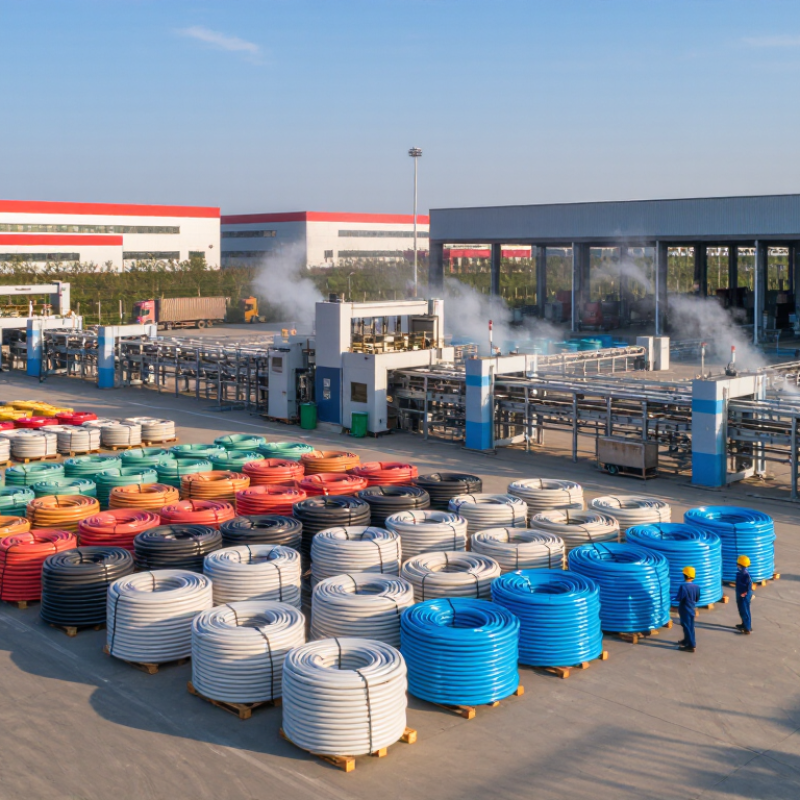
Fibre optic ducting is a protective pathway for optical cables. It is commonly made from durable plastic, such as HDPE, and installed underground, inside buildings, or along transport routes. The duct separates fragile fibre from soil, water, pressure, and accidental impact. It also creates a controlled route for installation, testing, replacement, and future network expansion.
Its value becomes clear during maintenance. A correctly sized duct reduces pulling tension and respects the cable’s minimum bend radius. Smooth inner walls help prevent scraping during installation. Sealed ends limit water and mud entry. Poor planning causes trouble. Tight bends, crushed sections, and unclear route records can turn a simple repair into costly excavation. A spare inner pathway may look unnecessary today, yet it can support additional capacity later.
Tips:
Check the duct’s internal diameter against the cable size. Keep bends gradual and mark access points clearly. Use detectable warning tape where underground routes require it. Inspect joints before backfilling, because small defects become difficult to find afterward. Do not rely on appearance alone; pressure checks and camera inspections can reveal hidden damage. One detail is often missed: installation records should show depth, crossings, and unused capacity. Those records may not be perfect, but updating them after every change improves reliability.
China Top 10 Fibre Optic Ducting Manufacturers? - What Is Fibre Optic Ducting and Why Does It Matter?
Anonymous technical benchmark of key fibre optic ducting manufacturing capabilities and commonly specified product data
| No. | Manufacturer Capability Area | Typical Product or Process Data | Why It Matters | Common Reference or Verification Method |
|---|---|---|---|---|
| 1 | High-density polyethylene microduct production | Typical outside diameters range from approximately 5 mm to 25 mm; wall thickness and internal diameter are selected according to cable size and installation method. | Small internal ducts support high fibre density and allow additional cables to be installed without major civil works. | Dimensional inspection, internal diameter gauges, and duct profile measurement. |
| 2 | Multi-way duct and bundled microduct assembly | Common configurations include 2-way, 4-way, 7-way, and 12-way bundles, with each pathway individually sized for a specific fibre cable. | Bundled pathways simplify route planning and reserve capacity for future network expansion. | Bundle geometry, separation between pathways, tensile testing, and installation trials. |
| 3 | Low-friction internal duct design | Silicone-coated, co-extruded, or ribbed internal surfaces are used to reduce cable pulling resistance; friction performance depends on cable weight, route length, bends, and installation lubricant. | Lower friction helps protect fibre cables from excessive pulling tension and improves installation distance. | Friction coefficient testing, cable-blowing trials, and maximum pulling-tension calculations. |
| 4 | Direct-burial and underground duct construction | Heavy-duty polyethylene ducts are designed to resist soil loads, handling stress, moisture, and impact during underground installation. | Suitable wall stiffness and impact resistance reduce the risk of crushing, deformation, and water ingress. | Compression, impact, ovality, hydrostatic pressure, and environmental stress-cracking tests. |
| 5 | Blown-fibre and air-assisted installation compatibility | Ducts are commonly supplied with smooth or low-friction bores, controlled ovality, sealed joints, and compatible internal diameters for compressed-air installation. | Consistent duct geometry supports stable airflow and longer cable-blowing distances. | Airflow testing, cable-blowing distance tests, bore inspection, and joint-leakage checks. |
| 6 | Mechanical and dimensional quality control | Typical controls include outside diameter, wall thickness, ovality, length, surface condition, tensile strength, elongation, and resistance to impact. | Stable dimensions improve joint fit, cable installation performance, and long-term network reliability. | Production sampling plans, calibrated gauges, tensile equipment, and batch inspection records. |
| 7 | Temperature and environmental resistance | Polyethylene ducting is generally selected for outdoor use because it offers resistance to moisture, corrosion, and a broad range of installation temperatures. | Environmental durability helps protect fibre cables throughout the expected service life of the route. | Thermal cycling, UV exposure where applicable, water absorption, and environmental stress-cracking tests. |
| 8 | Jointing, couplers, end caps, and sealing systems | Accessories commonly include straight couplers, gas-and-water-blocking seals, end caps, branch connectors, and transition fittings. | Reliable accessories prevent water migration, maintain duct continuity, and simplify maintenance. | Pressure testing, water-blocking tests, dimensional compatibility checks, and field installation trials. |
| 9 | Reel length and logistics capability | Ducts are supplied in coils or reels; practical delivery lengths depend on duct diameter, wall thickness, reel size, transport limits, and site handling equipment. | Longer continuous lengths reduce the number of underground joints and installation points. | Reel integrity inspection, coil memory assessment, length verification, and packaging checks. |
| 10 | Standards, traceability, and project customization | Professional suppliers normally provide batch numbers, material certificates, inspection records, technical drawings, colour identification, marking, and customized duct configurations. | Traceability and documentation support project approval, quality audits, installation control, and future maintenance. | Applicable IEC, EN, ASTM, ISO, and purchaser specifications, supported by factory quality records and third-party testing where required. |
Related Posts
-

What is Fibre Drop Cable and Its Uses in Network Installation
-
10 Best Telecom Fibre Suppliers for Global Buyers
-

How to Use Fibre Optic Lighting to Enhance Your Space?
-

Understanding Drop Cable Types: A Comprehensive Guide for Fiber Optic Solutions
-

How to Choose the Best Fibre Optic Lighting Solutions?
-
Exploring the Rise of Sustainable Cable Tube Solutions: How Industry Trends Shape Energy Efficiency