What is a telecom cable and how does it work?
Telecom cables are vital for modern communication. They facilitate the transfer of data, voice, and video signals over long distances. These cables consist of multiple strands, each designed to carry information effectively.
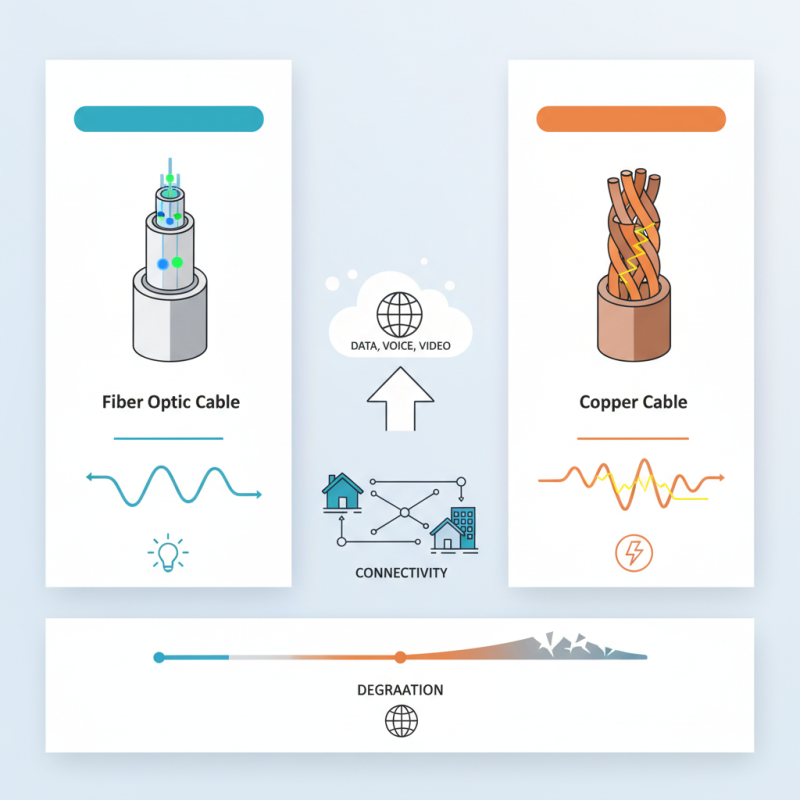
A common type is the fiber optic cable. This cable uses light to transmit data, resulting in faster communication speeds. Copper cables, on the other hand, rely on electrical signals. Each type has its strengths, but they both play crucial roles in our connected world.
Many people use telecom cables daily without realizing it. These cables connect homes to the Internet and link businesses worldwide. However, not every installation is perfect. Some cables may degrade over time, affecting performance. Understanding how telecom cables work is essential for appreciating the technology that connects us.
What is a Telecom Cable?
Telecom cables are essential components in modern communication systems. These cables transmit data over long distances. They come in various forms, including twisted pairs, coaxial cables, and fiber optics. Each type serves a specific purpose and offers unique advantages.
Twisted pair cables consist of pairs of wires twisted together. This design reduces interference and improves signal quality. Coaxial cables have a central conductor and an insulating layer. They are commonly used for cable television and internet connections. Fiber optic cables use light to transmit data. They are capable of handling large amounts of information at high speeds.
The choice of telecom cable impacts performance. For instance, improper installation may lead to signal loss. This issue can cause slow internet speeds and dropped calls. Many users overlook this factor when setting up their home networks. Investigating and selecting the correct type of cable is vital for optimal functioning.
Ultimately, the effectiveness of a telecom cable lies not only in its design but also in its installation and application.
Types of Telecom Cables and Their Applications
Telecom cables serve as the backbone of modern communication. Different types of telecom cables cater to varying needs.
Fiber optic cables are widely used for high-speed internet. They transmit data as light signals. This allows for faster communication compared to traditional copper cables.
In fact, studies show that fiber optics can support bandwidths above 10 Gbps.
Twisted pair cables are common in telecommunications. They consist of pairs of wires twisted together. This design helps reduce electromagnetic interference.
They are often used in telephone lines and local area networks (LANs).
Coaxial cables can transmit high-frequency signals. They are popular for cable television and internet services. Their design features a central conductor surrounded by insulation and shielding.
Tips: Always consider the environment when selecting a telecom cable. Outdoor cables have special coatings to resist weather and UV rays. Inside buildings, shorter cables may work just fine but can affect signal strength.
Testing cable performance is crucial. If you notice a decline in speed, it may be time to upgrade.
How Telecom Cables Transmit Data
Telecom cables play a crucial role in how we transmit data today. These cables are made from various materials, including copper and fiber optics. They carry data through signals and electrical impulses. Fiber optic cables use light to transmit data, while copper cables rely on electrical currents. Each type has its unique advantages.
When we look at how telecom cables work, we see a complex system at play. Signals travel through the cables at incredible speeds. However, they can also encounter obstacles. Attenuation, for instance, weakens signals over long distances. This can lead to reduced data quality. In some cases, technology fails; connections drop unexpectedly. These issues often compel engineers to seek better solutions.
Data flow is not just about speed. It's also about accuracy. Errors can occur during transmission, affecting communication. This reality reminds us that while telecom cables are vital, they are not infallible. Improving technology is an ongoing challenge in the industry. Understanding telecom cables helps us appreciate the effort that goes into maintaining our connected world.
Telecom Cable Data Transmission Analysis
This chart illustrates the average data transmission rates (in Mbps) of different types of telecom cables over the years. The data highlights the evolution and performance variations of copper and fiber optic cables.
The Components of a Telecom Cable
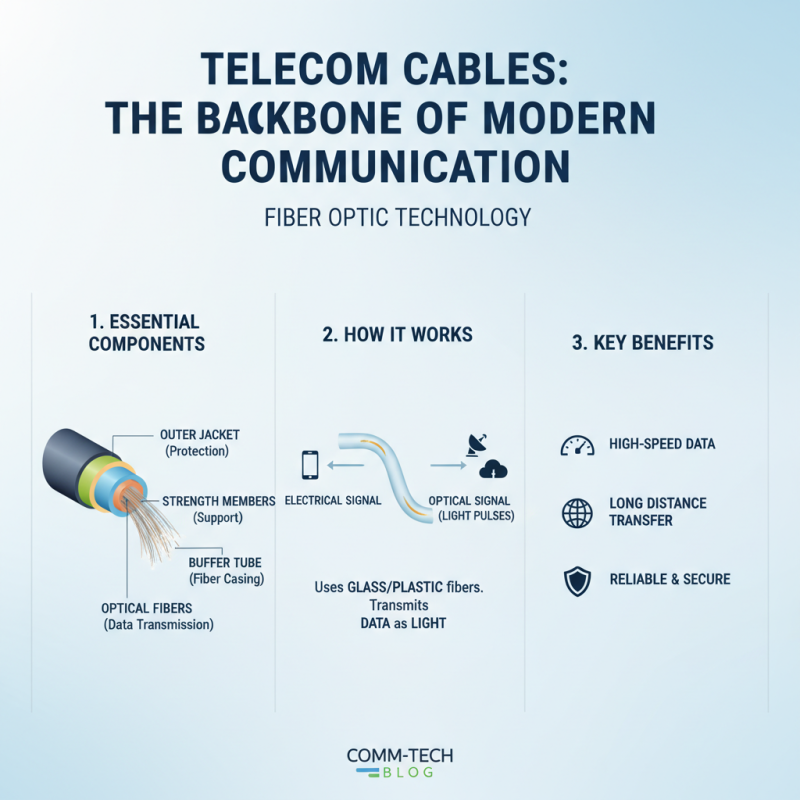
Telecom cables are essential for modern communication. They consist of several key components that work together to transmit data effectively. The most common type is the fiber optic cable, which uses glass or plastic fibers to allow light to pass through. This enables high-speed data transfer over long distances.
Another important aspect is the copper wire. Traditionally, copper cables were the standard for telecommunications. They still play a vital role in many areas. Copper cables transmit electrical signals, which can be impacted by interference. Their efficiency is often lower than fiber optics.
Protective layers are also crucial. A typical telecom cable has an insulating layer to prevent signal loss. An outer jacket shields the cable from physical damage. These components must be well-designed. If not, the entire communication system could fail. At times, we overlook these elemental details in our reliance on technology. Yet, understanding them enhances our appreciation for the invisible pathways connecting us.
Factors Affecting the Performance of Telecom Cables
Telecom cables are vital for communication. However, various factors can affect their performance. One major aspect is the material used. Copper and fiber optic materials have distinct qualities. Copper is more susceptible to interference, while fiber optic cables offer higher bandwidth. Choosing the right material can significantly impact signal quality.
Another important factor is the installation process. Proper installation ensures that cables remain intact and functional over time. Cable bends and twists can create signal loss. It’s essential to follow guidelines during installation. Furthermore, environmental factors play a role. Temperature changes may affect cable lifespan. Moisture exposure can lead to deterioration as well.
Maintenance is also crucial for optimal performance. Regular inspections can identify potential issues early. Neglecting maintenance can cause future problems. Overall, understanding these factors helps improve telecom cable efficiency. It's an ongoing learning process that requires attention and care.