10 Essential Tips for Choosing the Right Fibre Optic Cable for Your Needs
When it comes to selecting the right fibre optic cable for your specific needs, understanding the various options available is crucial. Fibre optic cables have become an essential component in modern telecommunications and networking, praised for their ability to transmit data at high speeds over long distances with minimal loss. However, the vast array of types, specifications, and applications can often lead to confusion for both professionals and those new to the field.
In this guide, we will explore ten essential tips to help you make an informed choice when purchasing fibre optic cable. Whether you are upgrading your home network, setting up a business infrastructure, or planning a large-scale installation, knowing how to select the appropriate fibre optic cable is vital for ensuring optimal performance. From considering the type of fibre, performance characteristics, installation requirements, to understanding the implications of future scalability, each aspect plays a pivotal role in your overall decision-making process. By following these guidelines, you can confidently determine the best fibre optic solutions tailored to your unique requirements.
Understanding Different Types of Fibre Optic Cables Available Today
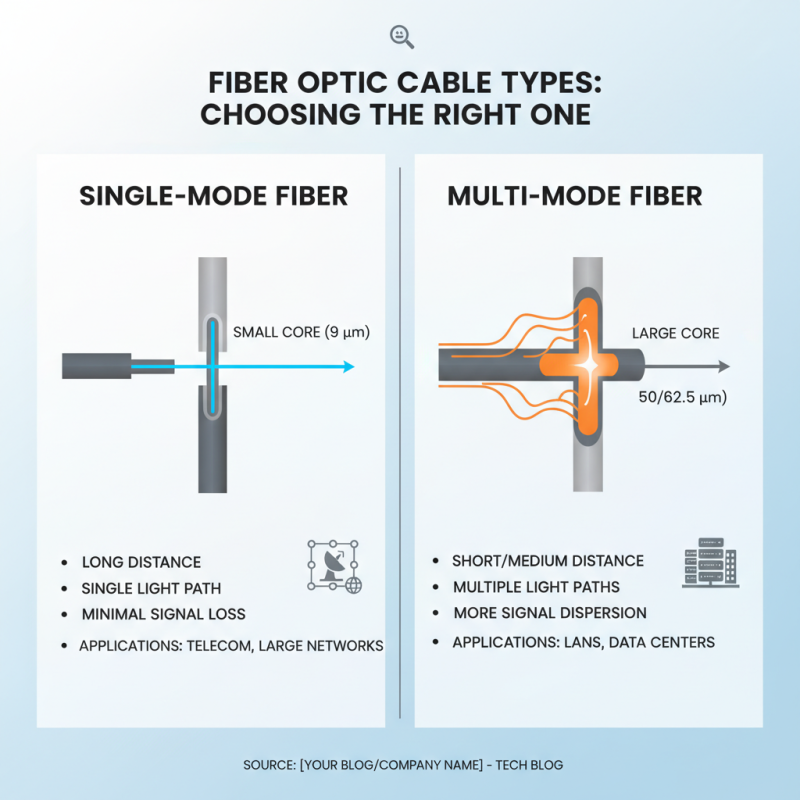
When selecting the right fibre optic cable for your needs, it is crucial to understand the various types available today. The primary classifications include single-mode and multi-mode fibres. Single-mode cables, which have a smaller core diameter, are designed for long-distance data transmission. They utilize a single light path, allowing signals to travel further with minimal loss, making them an excellent choice for telecommunications and large-scale networks.
On the other hand, multi-mode cables feature a larger core, enabling multiple light paths to transmit data simultaneously. This design allows for shorter distances and is typically favored in local area networks (LANs) or data centers. Multi-mode fibres come in various types, such as OM1, OM2, OM3, and OM4, each supporting different bandwidths and distances. Understanding these distinctions is essential for making an informed choice, ensuring that the selected fibre optic cable aligns with your bandwidth requirements, distance, and overall network performance goals.
Assessing Your Specific Networking Needs for Fibre Optic Cables
When selecting the appropriate fibre optic cable for your networking needs, it is crucial to assess various factors that can impact performance and scalability. According to a report from the International Telecommunications Union (ITU), the demand for high-speed internet is growing exponentially, with global internet traffic expected to reach 4.8 zettabytes per year by 2022. This necessitates the use of fibre optic cables that can support high bandwidth and distance specifications.
One essential tip is to determine your specific application requirements. Different fibre types, such as single-mode and multi-mode cables, have distinct performance characteristics. Single-mode cables are ideal for long-distance applications, typically exceeding 10 kilometers, while multi-mode cables are suited for shorter distances, generally within 300 meters. Understanding these needs upfront can help ensure you choose the right type of cable to support current and future networking demands.
Additionally, consider the installation environment. According to the Fibre Optic Association, factors such as temperature fluctuations, moisture, and potential physical damage can influence cable performance. In data center settings, for instance, it is often advisable to select cables with improved durability and thermal resistance. Incorporating these considerations into your decision-making process will enhance the reliability and longevity of your fibre optic network. Always evaluate your unique networking situation before making a final choice to maximize performance and investment.
Key Factors to Consider When Selecting Fibre Optic Cable Length
When selecting fibre optic cable, one of the key factors to consider is the length of the cable needed for your specific application. The distance the signal must travel can significantly impact the choice of cable type and performance. For short distances, such as within a single room or building, multimode fibre optic cables are often ideal due to their ability to support high data rates over shorter spans. However, as the distance increases, single-mode fibre cables become essential. These cables are designed to carry signals over longer distances with minimal loss, making them suitable for applications that require high bandwidth over extended reaches.
Another important aspect to keep in mind is potential future expansion or modifications of your network. It's prudent to consider a cable length that not only meets your current needs but also anticipates future demands. Installing slightly longer cables can save on costs and labor if additional connections or equipment are needed down the line. Additionally, ensure that the routing of the cable does not create excessive bends or pulls, as this can adversely affect performance, especially over long distances. Selecting the right cable length involves balancing immediate requirements with future growth potential to maintain optimal performance now and in the future.
Fibre Optic Cable Length Comparison
Evaluating Cable Performance: Data Rate and Distance Requirements
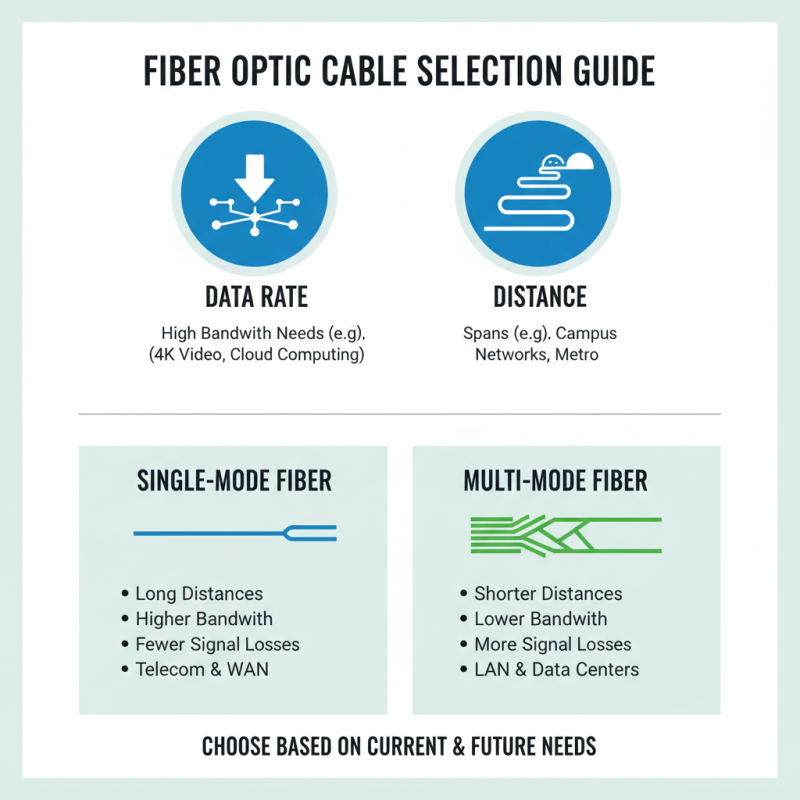
When selecting the right fibre optic cable for your specific needs, it’s crucial to assess both its data rate capabilities and the distance over which it will be used. The data rate refers to the amount of information transmitted per second, which is pivotal for applications requiring high bandwidth, such as video streaming or large data transfers. Different types of fibre optic cables, including single-mode and multi-mode, can significantly vary in their data transmission capabilities. Understanding the bandwidth requirements of your applications will enable you to choose a cable that not only meets current demands but also allows for potential future upgrades as technology evolves.
Distance is another critical factor when evaluating fibre optic cables, as it determines how far the signal can travel without substantial loss of quality. Single-mode fibres are typically used for long-distance applications due to their ability to carry signals over greater distances with minimal attenuation. In contrast, multi-mode fibres are best suited for shorter distances, such as those found within a building or campus. Knowing the layout of your installation and the distances involved will help narrow down your options and ensure you select a fibre optic cable that delivers optimal performance for your specific environment.
Installation Considerations for Fibre Optic Cables in Your Environment
When considering the installation of fibre optic cables, it's crucial to assess the specific environment to ensure optimal performance and longevity. Research indicates that environmental factors, such as temperature and humidity, can significantly impact the efficiency of fibre optic systems. For instance, the Telecommunications Industry Association (TIA) stresses that fibre optic cables should be suitable for the operating environment, which can influence signal loss and cable lifespan. Installing cables in areas with extreme temperatures or high moisture levels may require additional protective measures or specialized cabling designed to withstand these conditions.
Furthermore, the installation space must be evaluated for potential physical obstacles that could impede cable routing and accessibility. According to a report by the Fiber Optic Association (FOA), proper installation practices, including the use of appropriate raceways and conduits, are vital to prevent mechanical stress on fibres. This attention to detail not only mitigates the risk of damage but also ensures that the cables maintain their integrity and performance over time. A thorough understanding of the installation environment is instrumental in avoiding costly downtimes and ensuring the reliable operation of fibre optic networks.
10 Essential Tips for Choosing the Right Fibre Optic Cable for Your Needs
| Tip Number |
Tip Description |
Installation Environment |
Cable Type |
| 1 |
Consider the distance the signal needs to travel. |
Indoor/Outdoor |
Single-mode |
| 2 |
Evaluate the bandwidth requirements. |
Data Center |
Multi-mode |
| 3 |
Assess environmental factors such as temperature and moisture. |
Outdoor |
Armored |
| 4 |
Choose the right connector type based on your devices. |
Indoor |
SC, LC, ST |
| 5 |
Determine the installation method (rigid or flexible). |
Tunnel/Trench |
Loose tube |
| 6 |
Review future scalability options. |
Office |
Multi-mode |
| 7 |
Check for compliance with industry standards. |
Industrial |
Armored |
| 8 |
Consider the total cost of ownership including installation. |
Residential |
Single-mode |
| 9 |
Select a supplier with reliable customer support. |
Commercial |
Multi-mode |
| 10 |
Read reviews and get recommendations from industry professionals. |
Any |
Any type |