What is Drop Cable and How Does It Work in Telecommunications Industry
In the rapidly evolving telecommunications industry, the demand for efficient and reliable connectivity solutions continues to grow. One essential component that plays a crucial role in delivering services to end users is the "drop cable". These specialized cables serve as the final link in the fiber optic or coaxial distribution network, connecting the main service lines to individual homes or businesses. Understanding the function and significance of drop cables is vital for any stakeholder in the telecommunications sector, as they directly influence the quality and performance of the services offered.
Drop cables are designed to ensure seamless communication between the provider's infrastructure and the consumer's premises. Their construction typically involves a careful selection of materials that enhance durability and signal integrity, allowing for optimal data transmission even over considerable distances. As the telecommunications landscape continues to push towards higher bandwidth demands and faster internet speeds, the advancements in drop cable technology remain a key factor in meeting these expectations. In this article, we will explore the various types of drop cables, their operational mechanisms, and their overarching impact on the telecommunications industry.

What is Drop Cable in Telecommunications?
Drop cable in telecommunications refers to the physical medium that connects the telecommunications network to individual homes or businesses. Typically, drop cables are composed of a combination of optical fibers and electrical conductors that facilitate high-speed data transmission over relatively short distances. These cables serve as a bridge between the main distribution network and the end-users' devices, ensuring that data, voice, and video services reach consumers reliably.
The construction of drop cables is designed to be both durable and flexible, allowing for installation in various environments. They are often installed outdoors, where they are subject to environmental conditions such as humidity and temperature fluctuations. As a result, drop cables are usually shielded to protect against moisture and physical damage. The design ensures minimal signal loss, thereby maintaining the quality of the services provided to end-users. By enabling efficient connectivity, drop cables play a crucial role in the overall infrastructure of telecommunications networks, significantly impacting the performance and reliability of services offered to customers.
The Components of Drop Cable Explained
Drop cable is an essential element in the telecommunications industry, primarily used for connecting a service provider's network to the end user. Understanding the components of drop cable helps to comprehend its functionality and effectiveness.
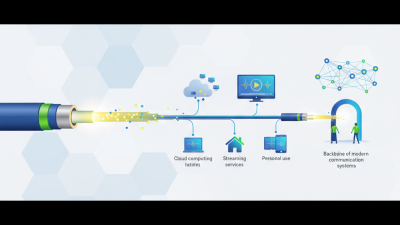
Typically, a drop cable consists of several key components: fiber optic or coaxial conductors, protective sheathing, and connectors. Fiber optic conductors are crucial for high-speed data transmission, providing a rapid and efficient way to send information over long distances. The coaxial option, on the other hand, is often used for cable television and broadband internet, utilizing copper wires surrounded by insulation and shielding to minimize interference.
The protective sheathing serves multiple purposes. It not only shields the internal conductors from environmental factors, such as moisture and physical damage, but also ensures durability and flexibility, making it suitable for various installation scenarios. Additionally, connectors play a vital role in establishing secure connections between the drop cable and the network equipment, ensuring reliable performance. Together, these components create a robust system that is vital for delivering telecommunications services to consumers.
How Drop Cable Works in Network Connectivity
Drop cable plays a crucial role in the telecommunications industry, serving as a vital link between main distribution points and end-user locations, such as homes and businesses. Typically composed of multiple fiber optic or copper wires, drop cables are designed to deliver high-speed internet, telephone services, and cable television to residential or commercial users. The deployment of drop cables is essential for enhancing network connectivity, as they facilitate the last leg of the communication journey, ensuring that users can access services efficiently and reliably.
The functioning of drop cables hinges on their ability to transmit data over short distances with minimal signal loss. In a fiber optic drop cable, light signals travel through glass fibers, allowing for high bandwidth and fast data transmission rates. On the other hand, copper drop cables utilize electrical signals to relay information. Regardless of the medium, drop cables are often equipped with robust insulation and protective jackets to safeguard them from environmental factors and physical damage. This combination of durability and high performance enables drop cables to maintain stable connectivity, which is essential for modern communication needs.
Drop Cable Usage in Telecommunications
Benefits of Using Drop Cable in Telecommunications
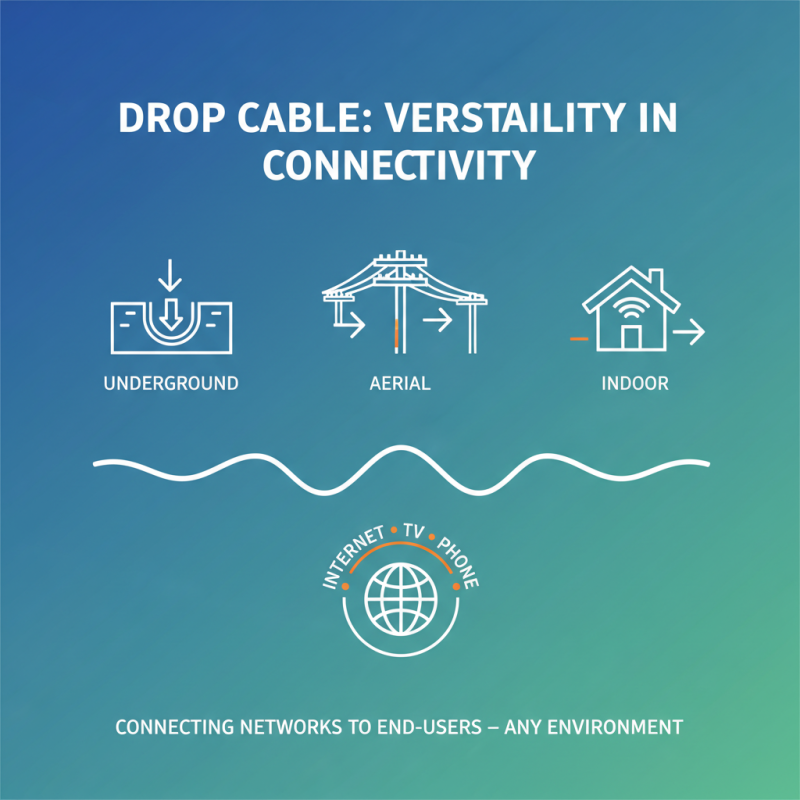
Drop cable plays a crucial role in the telecommunications industry by serving as the final connection between a telecommunications network and the end-user. One of the key benefits of using drop cable is its versatility. Available in various configurations, drop cables can accommodate different installation environments, whether they are underground, aerial, or indoor. This adaptability allows service providers to efficiently meet the diverse needs of residential and commercial users, ensuring a robust connection for internet, television, and telephone services.
Another significant advantage of drop cables is their minimal signal loss over short distances. This efficiency translates to higher bandwidth availability for consumers, facilitating faster data transmission and improved overall service quality. Additionally, drop cables are designed with durability in mind, often featuring protective coatings that make them resistant to environmental factors such as moisture and UV exposure. As a result, they require less frequent maintenance and replacement, further enhancing operational efficiency for telecommunications companies and delivering reliable service to customers.
Common Applications of Drop Cable in the Industry
Drop cables play a crucial role in the telecommunications industry, serving as the final link from the distribution network to the end user. These cables are primarily used for the deployment of high-speed internet and voice services, particularly in residential and commercial settings. According to a report by Research and Markets, the global market for drop cables is expected to reach USD 6.5 billion by 2027, driven by the increasing demand for broadband connectivity and the proliferation of IoT devices.
One of the most common applications of drop cables is in Fiber to the Home (FTTH) installations, where they facilitate the connection between the fiber distribution hub and individual households. The use of drop cables in FTTH systems has seen significant growth, with analysts predicting that FTTH subscriptions will surpass 200 million globally by 2025, as reported by the FTTH Council. Moreover, drop cables are essential for telecommunications providers expanding their networks in urban areas, supporting the increase in data traffic and enabling service providers to offer faster internet speeds and higher bandwidth to consumers.
In addition to residential applications, drop cables are also utilized in business environments, connecting office buildings to the broader telecom infrastructure. A recent study from the International Telecommunications Union highlighted that businesses leveraging high-speed drop cable connections experience a 30% increase in operational efficiency. This versatility and ability to cater to diverse user needs make drop cables a vital component in the evolving landscape of telecommunications.