
For global buyers, choosing Commercial Lifts from China means looking beyond a low quotation. Capacity, duty cycle, ride quality, controls, safety features, and local service all affect long-term value. A lift serving a busy hotel lobby faces different demands from one in a small office building. The details matter.
The International Energy Agency reports that buildings account for about 30% of global final energy consumption. That figure covers buildings broadly, not lifts alone, but it makes energy use a sensible procurement question. Buyers should compare standby consumption, drive technology, and performance data rather than rely on promotional claims. The UN’s 2018 urbanization report projected that 68% of the world’s population would live in urban areas by 2050. More dense cities mean more pressure on vertical transport. Not just price.
Safety deserves equal attention. Elisha Graves Otis, the lift-safety pioneer, famously declared during a safety-brake demonstration, “All safe, gentlemen! All safe!” His words capture a principle still relevant to commercial building projects: confidence depends on dependable design and verification. Yet no single supplier ranking fits every buyer. Project requirements, destination-country standards, installation capability, spare-parts access, and after-sales response can change the right choice. A polished catalogue cannot prove service quality. Buyers should verify technical documents and speak with references where possible. This guide compares leading Chinese commercial lift options through those practical checks, while recognizing that supplier claims still require independent confirmation.
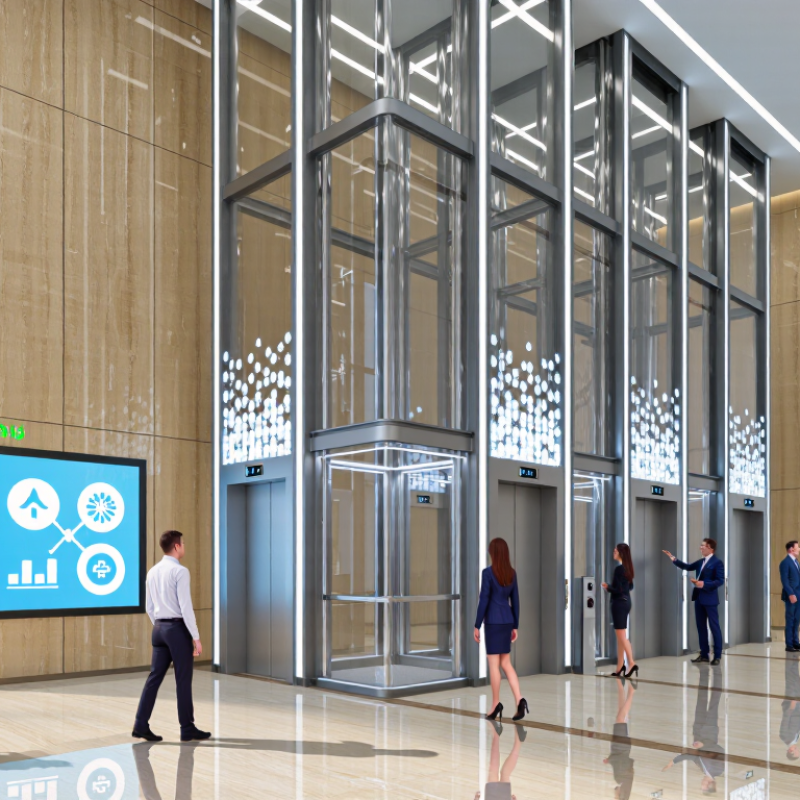
Commercial lifts are powered systems designed to move people, goods, or both through buildings used by the public or businesses. They appear in offices, hotels, hospitals, shops, warehouses, and transport hubs. Unlike a private home lift, a commercial unit may face heavier traffic, larger loads, and longer operating hours. That distinction matters.
Passenger lifts carry visitors and staff between floors, often with features such as clear floor indicators, handrails, and accessible controls. Freight lifts move stock, equipment, or pallets between loading areas and storage levels. Service lifts handle smaller items, such as meals, laundry, or supplies, keeping routine deliveries separate from busy public corridors. Space is never neutral. A lift shaft uses valuable floor area, so its location can affect how people and goods move through the whole building.
The right lift depends on the building’s layout, expected traffic, load size, and available power. A hotel may need fast passenger service during morning checkout, while a warehouse may prioritize a wide car and durable flooring. Real performance also depends on installation quality and regular maintenance. A lift can look generous on a plan but feel cramped when carts meet at the doorway. That detail is easy to miss, and worth checking before specifications are finalized.
Commercial lift ranges made in China cover several distinct needs. Passenger elevators serve offices, hotels, clinics, and shopping centers, with capacity and speed selected for expected traffic. A busy lobby may need larger cabins or more frequent service than a small office building. Details matter.
Freight elevators move pallets, equipment, and stock between loading areas and upper floors. Their reinforced floors, wide doors, and loading capacity should match the actual goods, not just a brochure estimate. Service lifts, including compact dumbwaiters, carry meals, documents, or supplies between kitchens and work areas. For healthcare buildings, bed lifts need room for a stretcher, attendants, and turning space. Accessibility platform lifts can help bridge short level changes where a conventional elevator is impractical.
Chinese suppliers also offer panoramic passenger lifts, which use glass panels to create an open view in hotels or commercial atriums. Escalators and moving walks suit continuous pedestrian flow, though they require different layouts and maintenance planning. Buyers should compare rated load, travel height, door dimensions, control options, and local service availability. Ask for drawings and test documentation early. A specification can look complete yet miss a site constraint, such as a shallow pit or limited overhead clearance. That part deserves another review.
Assessing a Chinese lift manufacturer takes more than reviewing a catalogue. Ask for project references with comparable building height, traffic patterns, and operating conditions. Request technical drawings, component specifications, and a clear explanation of the proposed drive and control systems. Check whether the manufacturer can provide documented load-test results and traceable inspection records for the equipment you are buying.
Paperwork matters. Confirm that certificates and test reports apply to the exact model and destination market; requirements can differ between countries. Ask how quality checks are recorded during production, not only before shipment. A factory visit can help, but one polished tour is not proof of consistent manufacturing. Look for orderly component storage, inspection stations, and records that match the units being assembled. Small details count.
After-sales support deserves equal scrutiny. Ask who handles installation guidance, spare-parts supply, and technical questions after delivery. Request realistic response times and clarify what training is included. Compare answers across the sales proposal, technical documents, and service plan. If they do not align, pause and ask why. A manufacturer may offer strong pricing, yet unclear maintenance arrangements can create real costs later. No checklist removes every risk; independent inspection before shipment may still be worthwhile.
These indicative planning ranges show commonly encountered elevator speeds, not regulatory limits or guarantees for any manufacturer. Actual requirements depend on travel height, traffic analysis, capacity, and project specifications. When assessing suppliers, verify that the proposed lift’s rated speed and performance are supported by project-specific calculations, applicable safety compliance documents, and test records.
For global buyers, lift safety compliance starts with the destination market, not the supplier’s sales brochure. Requirements can differ by country, building type, and lift application. Common references include the EN 81 series in many markets and ASME A17.1/CSA B44 in North America, but neither should be treated as a universal approval. Confirm which rules apply to the exact installation before ordering.
Check the rated load, travel speed, door interlocks, emergency alarm, and rescue procedure against the project specification. Ask for current test reports, conformity documents, component traceability, and clear installation and maintenance instructions. Paperwork matters. So does the site inspection. A certificate for a lift model does not automatically prove that the installed system meets local requirements. Verify who performs acceptance testing and what records must be retained. One detail buyers sometimes miss: emergency lowering needs to work under the building’s actual power conditions, not just in a factory demonstration. Requirements can change, and document reviews can overlook practical gaps. Independent technical review is often worthwhile.
| Market or framework | Key standards and regulations | What they address | Approval or certification considerations | Buyer checks before procurement |
|---|---|---|---|---|
| European Union | Lift Directive 2014/33/EU; EN 81-20 and EN 81-50 are commonly used harmonised standards for passenger and goods-passenger lifts. | Lift safety and essential health requirements, including design, installation, testing, and safety components. | Applicable lifts require the relevant conformity assessment, CE marking, and an EU Declaration of Conformity. The assessment route and involvement of a notified body depend on the selected procedure. | Confirm the intended-use classification, applicable harmonised-standard editions, conformity-assessment route, technical documentation, and that the notified body is appropriately designated for the work. |
| United States and Canada | ASME A17.1/CSA B44 Safety Code for Elevators and Escalators, as adopted or amended by the relevant state, province, or local authority. | Equipment design, installation, inspection, testing, maintenance, and safety requirements for elevators and related equipment. | Local authorities having jurisdiction generally enforce the code through permits, inspections, and operating approvals. Adoption dates and local amendments can differ. | Check the project location’s adopted code edition, permitting process, inspection requirements, accessibility rules, and any local requirements for seismic or emergency operation. |
| China | GB/T 7588.1-2020 and GB/T 7588.2-2020 provide technical requirements and verification methods for lift construction and installation. China’s special-equipment safety rules and applicable safety technical specifications also apply. | Lift design and installation safety, verification, supervision, inspection, and use within China’s regulatory framework. | GB/T standards are recommended national standards; regulatory duties are established through applicable laws, regulations, and safety technical specifications. Inspection, registration, and other procedures depend on the equipment and project circumstances. | For a project in China, verify current applicable safety technical specifications, required inspections and registration, and the qualifications required for the relevant manufacturing, installation, repair, or maintenance activities. |
| Australia | AS 1735 series, together with the applicable state or territory work-health-and-safety rules and building requirements. | Elevator design, construction, installation, operation, and safety provisions, with requirements varying by equipment type and jurisdiction. | Registration, design verification, inspection, and operating requirements are administered under state or territory frameworks and may vary across Australia. | Confirm the applicable AS 1735 parts, local registration and inspection steps, and any building-accessibility requirements for the project location. |
| International reference | ISO 8100-1 and ISO 8100-2 provide international safety rules and design-rule verification methods for lifts. | Internationally aligned technical requirements for lift construction, installation, and design verification. | ISO standards are not, by themselves, a universal market-entry approval or product certification. A country or local authority may adopt or reference them, with national changes. | Use ISO references as a technical comparison point, then verify the destination market’s legally adopted codes, conformity procedures, and local amendments. |
| Accessibility across markets | EN 81-70 is a European accessibility standard for lifts; other markets may apply their own building and accessibility rules. | Accessibility features such as controls, signage, audible and visual signals, and space-related provisions for users with disabilities. | Accessibility obligations are determined by local law, building codes, and the standards adopted for the project; a technical standard alone may not establish compliance. | Specify accessibility needs early and check applicable requirements for dimensions, controls, communications, signage, and emergency features. |
| Quality-management certification | ISO 9001 is a quality-management-system standard, not a lift product-safety standard. | How an organization manages and improves its quality processes. | An ISO 9001 certificate does not replace lift-specific conformity assessment, statutory inspection, or market approval. | Check the certificate’s scope and validity separately from product test reports, safety-component documentation, and destination-market approvals. |
Note: Standards, editions, adoption status, and approval procedures can change and may be amended locally. Confirm the current requirements with the authority having jurisdiction and a qualified conformity-assessment or inspection body before placing an order.
A lift quote should be compared line by line, not by its headline price. Check whether it includes the controller, landing doors, delivery, testing, and site-specific adjustments. Ask for a clear list of exclusions. A low quote can hide costs for shaft measurements, electrical work, or protective storage during construction. Request the payment schedule and the conditions that trigger each installment. Check the details. For a busy office building, even a short delay can disrupt daily access, so compare the proposed delivery date with the installation plan.
Installation quality depends on preparation as much as equipment. Ask whether the supplier will inspect the shaft, pit, and overhead clearance before confirming the design. Clarify who coordinates with the builder and electrician, and how site changes are documented. Drawings can be useful, but older buildings do not always match them. I would leave room for surprises. For after-sales support, compare response hours, technician coverage, spare-parts availability, and warranty exclusions. Ask how urgent faults are handled and whether routine maintenance is included or priced separately. A written service plan makes these promises easier to verify later. That matters.