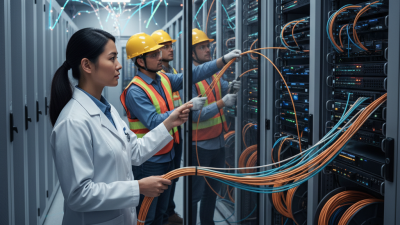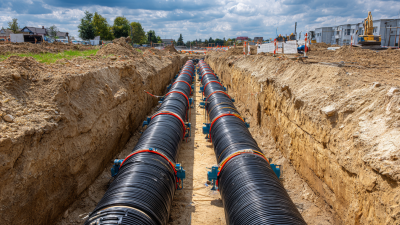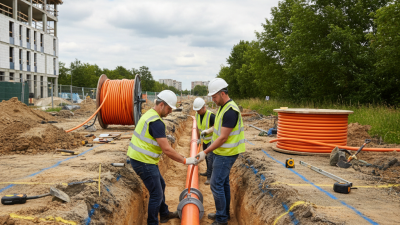
China’s fibre cable installation market supports data centres, 5G networks, cloud platforms, railways, and smart-city projects. This guide examines ten leading companies serving these demanding environments. It considers installation experience, engineering capability, regional coverage, safety management, and after-sales support.
A reliable fibre cable installation partner should do more than pull cable through a duct. Teams must survey routes, protect bend radii, complete fusion splicing, and test every link with OTDR equipment. They should also provide clear loss budgets, test records, as-built drawings, and maintenance plans. Small details matter. A poorly sealed joint can collect moisture. An over-bent cable can weaken performance months later.
Professor Peter J. Winzer, a widely respected optical-communications expert, has observed, “Fiber is the technology that enables the Internet to scale.” His point remains practical for Chinese infrastructure projects. Capacity grows only when installation quality keeps pace. This article therefore compares companies through measurable service indicators, not promotional claims alone. It also considers whether suppliers can coordinate with contractors, network operators, and local authorities.
No ranking is perfect. Company strengths can vary by province, project size, and technical team. Some firms excel at long-distance backbone routes, while others perform better inside buildings or data centres. Readers should verify certifications, recent project references, insurance coverage, and testing procedures before making a decision. Price is useful, but it should never replace workmanship. A cheaper installation may create expensive troubleshooting later.
China Top 10 Fibre Cable Installation Companies?
Definition and Scope of Fibre Cable Installation in China
Fibre cable installation in China covers far more than pulling cable through a conduit. It includes route surveys, cable selection, trenching, duct preparation, splicing, testing, labeling, and handover records. The work may support telecom networks, data centers, railways, industrial parks, or campus buildings. The scope is broad. Outdoor projects must consider soil movement, flooding, traffic loads, and temperature changes. Indoor work requires careful bending control, fire protection, rack organization, and access planning. Experienced teams also check local construction conditions before fixing a schedule.
Tips: Request a written method statement before installation begins. It should describe pulling tension, minimum bend radius, joint protection, test equipment, and safety controls. Ask for optical time-domain reflectometer results and insertion-loss records after splicing. Photographs of ducts, chambers, labels, and sealed entries can prevent later disputes. Small errors matter. A poorly sealed duct may admit water months later.
Reliable installation also depends on communication between designers, contractors, inspectors, and site owners. Technicians should verify drawings against actual routes, because underground records are not always complete. In practice, a neat plan can still fail when a chamber is blocked or a cable path changes. That weakness deserves attention. Quality checks should occur during preparation, installation, and acceptance, not only at the end. Clear documentation, traceable testing, and trained personnel provide stronger evidence than a low installation price alone.
China’s top ten fibre cable installation companies should be selected through evidence, not publicity. China’s Ministry of Industry and Information Technology reported more than 600 million fixed broadband subscriptions in 2023, creating a demanding installation market. The scale requires proven field capability.
A credible assessment should examine completed fibre routes, annual installation capacity, technician qualifications, safety performance, and fault-repair times. Auditors should verify project records, not rely on brochures. The FTTH Council Asia-Pacific’s regional research highlights continued fibre expansion and rising household connectivity, so coverage quality matters as much as cable volume. CRU’s Fibre Optic Cable Market Outlook also identifies network investment, manufacturing capacity, and deployment efficiency as important market indicators.
Evidence must be comparable. Each candidate can receive weighted scores for technical experience, verified customer references, geographic coverage, quality control, environmental practices, and after-sales maintenance. Site inspections should check fusion-splicing records, cabinet labeling, bend-radius protection, and optical-loss test results. Small details reveal real competence. Independent safety data and audited financial information can strengthen reliability.
The method is not perfect. Public data may lag behind fast construction activity, while regional specialists may receive less visibility than large contractors. That weakness matters. A fair ranking should disclose its scoring period, sample size, and excluded information. It should also separate installation contractors from cable manufacturers and civil-engineering suppliers. This approach produces a more defensible list of leading Chinese fibre installation providers, grounded in operational proof rather than name recognition.
China Top 10 Fibre Cable Installation Companies?
A credible Top 10 profile should compare field experience, engineering capacity, safety systems, and local delivery records. Core services usually include route surveys, duct construction, fibre blowing, aerial deployment, joint splicing, OTDR testing, and emergency maintenance. Some contractors also handle data-centre links, FTTH access networks, and 5G backhaul. MIIT’s 2024 Statistical Bulletin reported more than 200 million gigabit broadband users in China. That scale demands consistent testing, documentation, and trained crews.
Regional coverage separates strong installers from narrow specialists. Coastal teams often manage dense urban ducts, railway corridors, and high-rise access projects. Central provinces need long-distance backbone construction and mixed rural routes. Western coverage can involve deserts, plateaus, extreme temperature changes, and limited transport access. Company profiles should identify provincial offices, subcontractor controls, average repair times, and experience with difficult terrain. A neat ranking can still hide uneven performance. Coverage claims can age quickly.
Tips: Request recent OTDR records, route maps, and project references. Check whether technicians understand local permits and municipal cable rules. Industry reports from ITU and regional broadband research groups show that fibre demand continues expanding, but deployment quality remains inconsistent. That is the uncomfortable part. The lowest bid may create higher costs through repeated splicing, water ingress, or delayed fault repairs. Use measurable evidence, not polished profiles.
| No. | Anonymized Company Profile | Core Installation Services | Typical Cable Systems | Primary Customer Segments | Main Regional Coverage | Typical Project Capability |
|---|---|---|---|---|---|---|
| 01 | Profile A — National Backbone Specialist Large-scale telecommunications infrastructure contractor |
Long-distance route construction, duct installation, cable pulling, jointing, OTDR testing, acceptance documentation | Single-mode OS2, loose-tube outdoor cable, ribbon cable, armored duct cable | Telecom carriers, backbone operators, public-sector networks | Nationwide; strongest coverage in eastern, northern, and central China | Intercity routes, metropolitan rings, high-fiber-count backbone deployments |
| 02 | Profile B — FTTH Deployment Specialist Access-network and last-mile installation provider |
FTTH drop installation, splitter deployment, building entry, cabinet termination, fusion splicing, subscriber activation | G.657.A1/A2 bend-insensitive fibre, drop cable, micro-cable, indoor distribution cable | Residential developers, broadband operators, municipal access programs | Dense urban markets in the Yangtze River Delta, Pearl River Delta, and Bohai Rim | High-volume apartment, townhouse, and urban FTTH rollouts |
| 03 | Profile C — Data Center Fibre Integrator Structured cabling and hyperscale connectivity contractor |
Pre-terminated trunk installation, rack dressing, patch-panel assembly, polarity verification, link-loss testing | OM4 multimode, OS2 single-mode, MPO/MTP trunks, duplex LC assemblies | Cloud providers, colocation facilities, financial institutions, enterprise IT departments | Beijing-Tianjin, Shanghai, Guangzhou-Shenzhen, Chengdu, and other data-center clusters | High-density server halls requiring controlled installation and rapid turnover |
| 04 | Profile D — Utility and Power Communications Contractor Specialist in fibre networks integrated with power infrastructure |
OPGW installation, ADSS deployment, tower access, grounding coordination, aerial inspection, emergency repair | OPGW, ADSS, figure-eight aerial cable, dielectric distribution cable | Electric utilities, renewable-energy operators, transmission and distribution projects | Northern, western, and central China; suitable for long overhead routes | Transmission corridors, substations, wind farms, solar parks, and smart-grid links |
| 05 | Profile E — Railway and Transportation Network Contractor Transport communications and signalling cabling provider |
Railway-side ducting, tunnel cabling, signalling-network fibre installation, testing, route protection, maintenance | Armored single-mode cable, railway-rated cable, indoor flame-retardant cable, redundant ring links | Railway operators, metro authorities, airports, highways, transport engineering firms | Major high-speed rail corridors and metropolitan transport systems | Long linear infrastructure, tunnels, stations, depots, and control centers |
| 06 | Profile F — Industrial and Campus Network Installer Enterprise, manufacturing, and smart-campus connectivity contractor |
Campus backbone installation, industrial Ethernet fibre links, pathway construction, termination, certification testing | OM3/OM4 multimode, OS2 single-mode, industrial breakout cable, ruggedized assemblies | Manufacturing plants, universities, hospitals, office campuses, logistics parks | Eastern and southern manufacturing belts, with project-based national delivery | Building-to-building links, production floors, control rooms, and campus backbones |
| 07 | Profile G — Underground Civil Works Specialist Fibre deployment contractor with strong municipal construction capability |
Trenching, micro-trenching, directional drilling, conduit placement, manhole construction, cable blowing and restoration | Micro-duct cable, duct cable, armored cable, high-density urban access cable | Municipal governments, telecom operators, utility companies, smart-city developers | Urban and suburban areas across eastern, central, and southern China | Roadside corridors, underground utility tunnels, commercial districts, and new developments |
| 08 | Profile H — Rural Broadband and Remote-Site Contractor Field installation provider for dispersed and difficult-access locations |
Aerial and buried deployment, pole-line work, remote cabinet installation, splicing, fault localization, maintenance | ADSS, aerial drop cable, outdoor loose-tube cable, low-temperature-rated cable | Rural broadband programs, county networks, schools, clinics, remote enterprises | Western, northwestern, southwestern, and mountainous regions | Long-distance rural routes, difficult terrain, low-density communities, and remote facilities |
| 09 | Profile I — Offshore and Coastal Communications Contractor Coastal, port, and marine infrastructure fibre specialist |
Port-network installation, coastal ducting, industrial-site cabling, marine-route coordination, testing and repair | Armored submarine cable, corrosion-resistant outdoor cable, ADSS, industrial single-mode cable | Ports, offshore energy facilities, coastal industrial parks, maritime authorities | Bohai Rim, Yangtze River Delta, southeast coast, and Pearl River Delta | Ports, bridges, coastal plants, offshore support bases, and marine communication links |
| 10 | Profile J — Maintenance and Emergency Restoration Provider Network operations, repair, and lifecycle support contractor |
24/7 fault response, fibre tracing, OTDR diagnostics, emergency splicing, route relocation, preventive maintenance | Existing single-mode backbone, access cable, indoor riser cable, armored and aerial cable | Carriers, data centers, industrial networks, campuses, public infrastructure operators | Regional service centers in major metropolitan areas with mobile field teams nationwide | Break-fix support, disaster recovery, migration work, network upgrades, and SLA-based maintenance |
China’s top ten fibre cable installation companies should be judged by engineering evidence, not advertising claims.
Strong contractors show experience across urban networks, industrial parks, rail corridors, and rural deployments. Their teams understand optical loss budgets, cable tension, bend radius, joint protection, and route risks. They also follow relevant IEC, ISO, and national telecommunications standards during design and installation.
Technology matters on site.
Technicians should use calibrated OTDR equipment, power meters, fusion splicers, and digital cable identifiers. A practical project team records splice results, cabinet locations, duct conditions, and cable lengths before handover. Weather protection is important. Dust, rain, and poor trench drainage can damage otherwise careful work. Small details often decide long-term network stability.
Delivery capability includes surveying, permitting coordination, material control, safety planning, testing, and maintenance support.
Experienced companies provide clear method statements and updated as-built drawings. They also explain delays instead of hiding them. That builds trust. Still, no contractor performs perfectly on every project. A company may excel in backbone construction but struggle with dense buildings or difficult restoration work. Buyers should inspect recent test reports, site references, technician qualifications, and response records before ranking any provider. Cost alone is a weak measure. Time pressure can expose gaps.
Comparing the top ten fibre cable installation companies requires more than counting completed projects. A practical market review should examine regional coverage, engineering certificates, safety records, response times, and documented testing methods. Public tenders, audited case studies, and client references offer stronger evidence than polished advertisements. Rankings can change quickly. One provider may lead in urban backbone work, while another performs better in remote terrain.
Application changes the buying decision. Data centers need low-loss links, strict bend-radius control, and detailed test reports. Telecom networks often prioritize long-distance reliability, splice quality, and restoration speed. Industrial sites require rugged cable routes, grounding awareness, and careful work near machinery. Residential projects usually value clean indoor installation and predictable scheduling. The cheapest quotation may hide weak testing or difficult maintenance access. That mistake becomes expensive later.
A useful comparison scores installation capacity, trained technicians, equipment calibration, warranty terms, and local spare-material support. Ask whether crews use optical time-domain reflectometers and provide trace files after commissioning. Check how the company handles damaged ducts, weather delays, and change orders. Insurance and clear contract responsibilities also matter. Site walks reveal details that spreadsheets miss. Still, selection is not perfectly objective. References can be incomplete, and even skilled teams may underestimate site complexity. Choose the provider that explains its limits clearly.
Technical reach comparison for common fibre cable categories used in installation planning
How to read the chart: The values show representative maximum link distances for selected 100 Gb/s Ethernet deployments: multimode fibre with SR4 optics and single-mode fibre with LR4 optics. Actual limits depend on transceiver type, channel loss, connector count, splice quality, and applicable network standards.
Key applications: OM3, OM4, and OM5 are commonly selected for short-reach data-centre and enterprise backbone links, while OS2 single-mode fibre is preferred for campus, metropolitan, long-haul, and outside-plant installations.
Selection criteria: When comparing installation providers, assess standards compliance, optical-loss testing, route design, bend-radius control, connectorisation quality, documentation, safety practices, warranty coverage, and experience with the target deployment environment.
Reference context: representative reach values aligned with common IEEE 802.3 Ethernet implementations; they are technical deployment references rather than supplier rankings or company performance scores.