
Choosing the right Vmq Compound in 2026 is less about finding a universal “best” grade and more about matching material behavior to the part’s real working conditions. A seal near a hot engine, a food-processing gasket, and an outdoor cable accessory face different demands. Temperature range, hardness, compression set, tear strength, cure method, and color stability can each change the buying decision. Small details matter: a seal may look sound on the bench, then lose its shape after repeated compression.
The market context is growing, but it needs careful interpretation. Grand View Research’s Global Silicone Market report estimated the broader silicone market at USD 18.5 billion in 2023 and projected a 7.5% compound annual growth rate from 2024 to 2030. That figure covers many silicone products; it is not a VMQ-specific forecast. Still, it signals why buyers may encounter more grades, suppliers, and claims. More choice is not always better.
This guide compares common VMQ compound types through practical purchasing questions: what temperatures they must withstand, how they respond to oils or weather, and which test data suppliers can provide. Ask for a current technical data sheet and verify test conditions, not just headline values. A hardness number alone tells little. One caveat: published figures may not predict performance in your exact design. Testing the finished component remains the sensible check.
VMQ is a silicone rubber whose backbone contains repeating silicon–oxygen links, with methyl and vinyl groups attached. The vinyl groups help the compound crosslink during curing. Manufacturers add silica fillers, pigments, and cure agents to tune strength, color, and processing. The result is an elastomer used in seals, gaskets, and flexible parts where heat stability matters. Formulations differ; “VMQ” alone does not specify performance.
Grand View Research’s 2024 Silicone Market Size, Share & Trends Analysis estimated the global silicone market at about US$20.8 billion in 2023. That figure covers many silicone products, not VMQ alone, but it signals broad industrial use. For a specific part, check the compound’s temperature rating, compression set, hardness, and fluid compatibility. A published temperature range is not a guarantee: a compressed seal near a hot engine may age differently from an unloaded test sample. That detail is easy to miss.
Buyers encounter VMQ compounds in several forms, not one universal grade. High-consistency rubber, or HCR, arrives as a firm, millable material for compression or transfer molding. Liquid silicone rubber, or LSR, is pumpable and suits automated injection molding. Room-temperature-vulcanizing compounds are also available for formed parts, sealants, and repairs. The labels are not always tidy.
Cure chemistry matters. Peroxide-cured grades are widely used for general molded components. Addition-cured grades can offer low volatile content and consistent processing, but need careful control of contamination. Some suppliers offer high-tear, electrically conductive, flame-retardant, or low-temperature formulations. These are modified compounds, not separate base polymers. A softer grade may seal well against a lightly uneven surface, while a firmer one can resist deformation under load.
Compare the actual datasheet, not just the compound name. Check hardness, tear strength, compression set, operating temperature, and cure conditions against the part’s use. For example, a gasket near a hot engine needs different validation from a flexible keypad. Ask whether test results apply to the supplied compound and finished part. A detail can be missed. Color, filler, and post-curing may affect performance, so confirm them before ordering.
VMQ compounds differ less by their silicone base than by reinforcement, cure system, and processing route. General-purpose grades suit seals and gaskets; high-tear grades resist edge damage during demolding and repeated flexing. Heat-resistant formulations can tolerate sustained exposure near 200°C, while low-temperature grades remain flexible around −50°C. These are practical guideposts, not guarantees: fillers and cure conditions shift results. Published engineering data commonly places tensile strength around 5–10 MPa, but test methods and specimen preparation matter. ASTM D412 measures tensile properties, while ASTM D2240 measures hardness. Compare results only when test conditions match. Small detail. It changes purchasing decisions.
Processing often separates high-consistency rubber from liquid silicone rubber. High-consistency VMQ arrives as a firm gum, usually mixed with fillers and cured by compression or transfer molding. It offers flexibility in compound design, but mixing and mold setup take time. Liquid silicone rubber is metered and injection-molded, making it useful for complex parts and repeatable production. It needs dedicated dosing equipment and tight process control. For compression-set comparisons, ISO 815-1 provides a recognized test method; ask suppliers for results at the same temperature and compression duration. A low-compression-set grade may preserve sealing force better, yet require a narrower cure window. Real parts can surprise you. Evaluate prototypes using the actual wall thickness, mold finish, and service fluid.
| VMQ compound type | Typical performance profile | Processing considerations | Best suited to | Buyer trade-offs |
|---|---|---|---|---|
| General-purpose, peroxide-cured VMQ | Broad everyday silicone performance; commonly available in a wide range of hardnesses, often about 20–80 Shore A. Many compounds are designed for service around −50 to +200°C, subject to grade and exposure. | Commonly processed by compression, transfer, or injection molding. Cure conditions depend on the formulation; post-curing may be specified to reduce residual cure by-products or improve properties. | General seals, gaskets, molded parts, and applications where a balanced cost and performance profile is needed. | Often a practical starting point, but not automatically suitable for low-extractables, extreme-temperature, or high-tear requirements. |
| Platinum-cured VMQ | Addition-cure grades can offer low volatile by-products and are often selected where low extractables, odor, or contamination risk matters. Actual compliance depends on the specific formulation and testing. | Requires careful two-part mixing and clean handling. Sulfur-containing materials, amines, some metal compounds, and other contaminants can inhibit cure; follow the compound supplier’s processing guidance. | Applications with tighter cleanliness or extractables requirements, including selected food-contact, medical, and precision molded parts when the grade is qualified for that use. | May cost more and is more sensitive to cure inhibition. “Platinum-cured” alone does not establish regulatory approval or suitability. |
| High-tear VMQ | Formulated to resist tearing and damage during demolding or repeated flexing better than standard grades. Tear strength varies substantially by formulation and test method. | Can be processed using standard silicone molding methods, but mold design, venting, cure conditions, and demolding practice still affect finished-part quality. | Thin sections, intricate molded parts, flexible components, and products exposed to repeated handling or mechanical stress. | Can improve durability, but may not be the lowest-cost option. Request tear data using a stated test method and specimen geometry. |
| Low-temperature VMQ | Specially formulated grades retain flexibility at lower temperatures than many standard compounds; some are designed for service near −60°C or below. Limits are grade-specific. | Generally uses conventional silicone molding processes. Validate cure, compression set, and sealing performance at the actual operating temperature. | Cold environments, outdoor equipment, refrigeration-related components, and seals that must remain flexible in low temperatures. | Low-temperature flexibility is not the same as proven low-temperature sealing. Check the required test method and temperature range. |
| Heat-resistant VMQ | Specialty grades can be designed for longer exposure to elevated temperatures than general-purpose VMQ; some are rated for continuous service around 225–250°C under defined conditions. | Mold using the grade-specific cure schedule. Assess aging, compression set, and mechanical-property retention after exposure to the real temperature and duration. | Hot-air, oven, and engine-compartment applications where conventional VMQ does not provide enough thermal-aging margin. | A maximum temperature rating is not a guarantee of long-term performance. Heat, pressure, and contact media can shorten service life. |
| Electrically conductive VMQ | Conductive fillers provide electrical conduction or static dissipation. Volume resistivity can vary by many orders of magnitude, depending on filler, formulation, and test conditions. | Filler loading can affect flow, mold wear, color, surface finish, and mechanical properties. Specify the required resistivity range and test method. | Grounding paths, static-control parts, and selected EMI shielding applications where a conductive elastomer is required. | Conductivity may come with reduced elongation or other property changes. Confirm electrical performance on the finished part, not just the raw compound. |
| Sponge or cellular VMQ | Cellular structure provides low density and compressibility; available as open-cell or closed-cell material depending on the product. Compression behavior and fluid resistance depend on the construction. | May be supplied as molded sponge or converted sheet and profile. Specify cell structure, density, skin, dimensions, and compression requirements. | Cushioning, vibration isolation, thermal insulation, and lightweight seals where a cellular material is appropriate. | Not interchangeable with solid VMQ: sealing, water uptake, compression set, and mechanical strength depend on cell type and construction. |
Buyer note: These are general selection guidelines, not guaranteed specifications. VMQ formulations vary, and compound categories can overlap. Confirm the exact hardness, test methods, temperature profile, media exposure, regulatory requirements, cure system, and finished-part performance with the supplier before purchase.
A VMQ compound should be chosen around the job, not just its temperature range. For an outdoor gasket, a standard weather-resistant grade may handle sunlight, ozone, and rain well. Check the expected compression and sealing pressure, too. A soft compound can seal uneven surfaces, but it may deform under sustained load.
For thin diaphragms or parts with sharp edges, consider a high-tear grade. It can resist damage during fitting and repeated flexing, though it may feel stiffer. Cold-room seals need a grade tested for low-temperature flexibility; a hot-air duct may need better heat-aging performance. Electrical enclosures call for insulating properties, while conductive grades serve different static-control needs. They are not interchangeable. For food-contact or medical equipment, confirm that the exact compound and finished part meet the applicable requirements.
Real conditions can be untidy. A seal may face heat, cleaning cycles, and compression at once. And the neatest datasheet choice can disappoint. Ask for test results that match the part’s geometry and operating cycle, then trial samples in the actual assembly. For oil or fuel exposure, standard VMQ may be a poor fit; verify compatibility before specifying it.
Compare indicative continuous service-temperature ranges to shortlist a VMQ compound for your application.
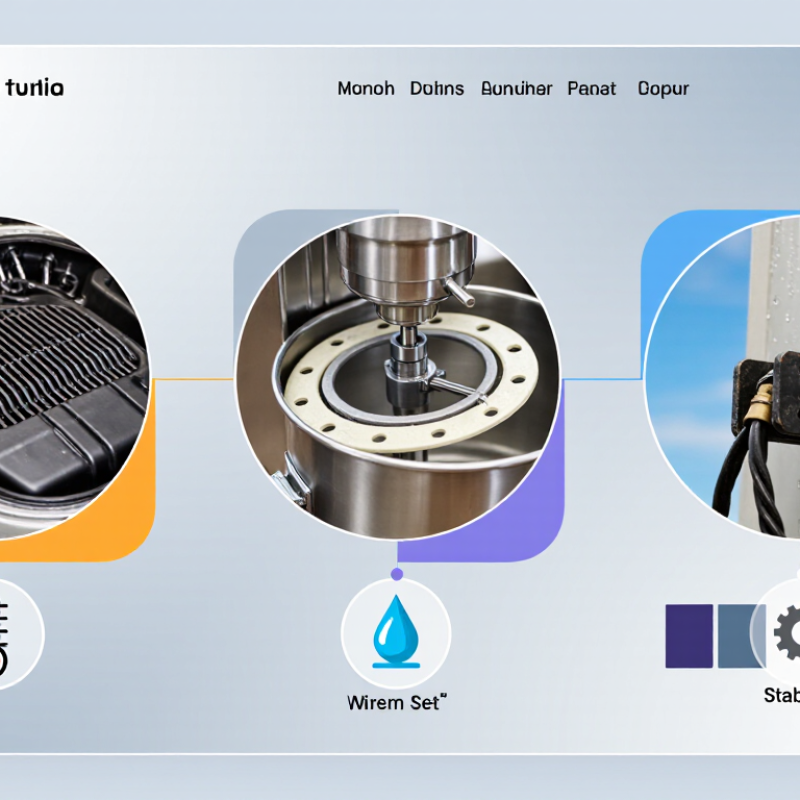
Application guide: General-purpose VMQ suits static seals and weather-resistant gaskets; low-temperature VMQ is a candidate for cold-weather seals; heat-resistant VMQ suits hot-air and engine-bay sealing; high-tear VMQ is useful for flexing parts such as diaphragms.
Ranges are representative selection guides, not universal specifications. Actual limits depend on formulation, exposure, load, and test method; confirm the exact grade’s datasheet and application requirements.
In 2026, select a VMQ compound by matching its test data to the real service conditions, not by choosing hardness alone. Grand View Research estimated the global silicone market at USD 18.29 billion in 2023 and forecast 6.8% annual growth through 2030. That figure covers silicone broadly, not VMQ specifically. It signals a growing materials market, but does not identify the right compound for your part.
Start with temperature, contact media, compression, and movement. For seals, compare compression-set results under ISO 815-1 and liquid exposure results under ISO 1817. Ask for test conditions, not just headline values: temperature, duration, and specimen details can change the result. Check hardness, tensile strength, and elongation too. A soft compound may seal well but deform under load. For moving parts, consider tear and abrasion resistance; VMQ is not automatically the best choice. That deserves a second look.
Tips: Send suppliers the actual fluid, temperature range, pressure, and expected service life. Request samples for application-specific testing. A datasheet is useful, but it cannot fully reproduce your assembly.